


.jpg)
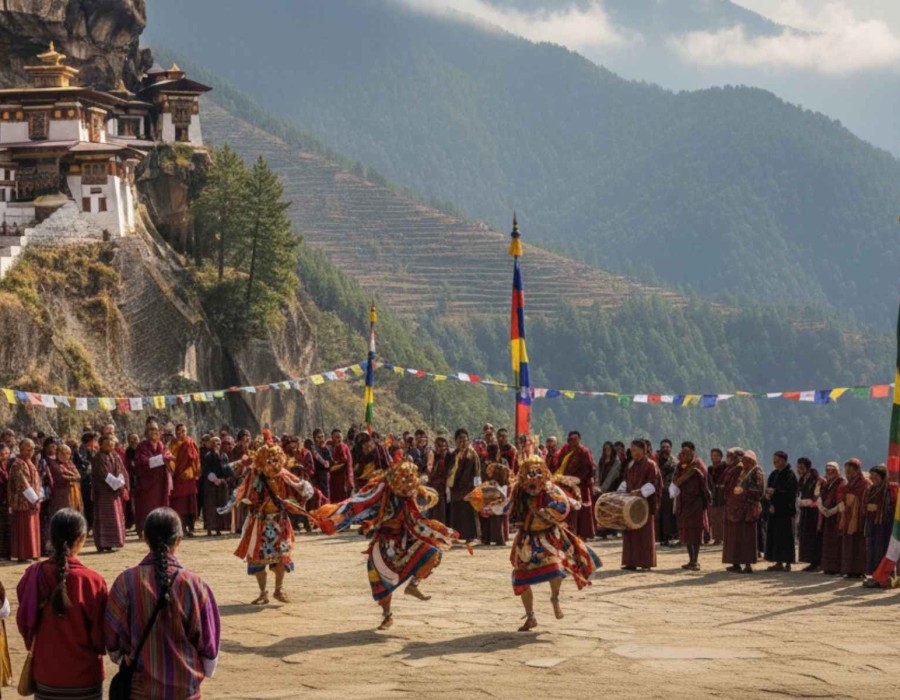
There’s a moment that stays with almost everyone who visits Bhutan.
It isn’t the first time you see a monastery perched on a cliff, or the moment a monk blesses you with holy water.
It’s something far simpler.
It’s the warm nod from a woman spinning her prayer wheel as she walks to the local temple.
It’s the smell of butter lamps at dawn.
It’s hearing a child whisper “Kuzu zangpo la”—hello—with a shy smile.
These moments don’t show up on itineraries.
They don’t appear in glossy brochures.
But they are the true soul of cultural tours in Bhutan.
We have learned that travelers don’t remember the monument—they remember the moment.
So here is a guide to the cultural experiences hidden in plain sight, the ones that truly define everyday Bhutan.
1. The Magic of Mornings: Butter Lamps and Quiet Blessings
If you wake up early in Bhutan—before the sun warms the valleys—you’ll notice a soft glow coming from temples and small village altars. Elders are lighting butter lamps, whispering prayers under their breath.
Most visitors see butter lamps as a photo opportunity.
But if you pause long enough, you’ll notice something else:
This ritual isn’t about religion.
It’s about clearing the mind, offering light to the world before the day begins.
A local grandmother once told us,
“When I light a lamp, I light one for everyone I love.”
This is the side of Bhutanese Buddhist culture that most tours overlook—the emotional, intimate meaning behind rituals.
2. Suja Conversations: Butter Tea and Big Hearts
Every Bhutanese household keeps a kettle ready.
Not for tourists—just for life.
When you enter a home, someone will inevitably bring you a cup of Suja (butter tea).
Its salty taste surprises most travelers, but the real beauty isn’t in the tea—it’s in the moment.
Bhutanese people don’t drink Suja alone.
It’s a drink for:
- friendship
- storytelling
- welcoming a stranger
A farmer in Punakha told us:
“When we serve tea, we say you are part of our family.”
When we at Bhutan Travel Now bring guests to a village home, they always say the Suja conversations were more memorable than any sightseeing stop.
3. The Culture of Respect: Tiny Gestures That Speak Volumes
You’ll notice Bhutanese people bow their heads slightly when passing elders.
Children greet everyone—even strangers—with a polite “la” at the end of their sentences.
Men step aside on narrow paths to let older women pass first.
These gestures are small but powerful.
They tell you everything you need to know about Bhutan’s social values—kindness, humility, and deep respect.
No guidebook teaches you this.
You simply witness it, and suddenly understand why Bhutan measures wealth in happiness, not money.
4. The Sounds of Bhutan: A Cultural Orchestra
Close your eyes anywhere in Bhutan and you’ll hear culture.
Not abstract, academic “culture”—living culture.
Listen for:
- Monastic chants rolling across valleys
- Wind chimes swaying outside temples
- Prayer wheels gently spinning
- Wooden pestles pounding grains in village kitchens
- Children singing folk songs during school assembly
These aren’t staged experiences.
They’re the soundtrack of everyday Bhutanese life.
Travelers often say these sounds stay with them long after returning home.
5. Farmhouse Living: The Real Cultural Heart of Bhutan
Most cultural tours mention a farmhouse visit.
Few actually show what makes it special.
Step inside a Bhutanese farmhouse and you’ll find:
- smoky kitchens filled with the aroma of ema datshi
- grandparents weaving stories more beautiful than any museum exhibit
- wooden floors warmed by the family bukhari (stove)
- children running around with homemade bamboo toys
- rice fields stretching beyond the window
These homes are not tourist attractions; they are living libraries of Bhutanese culture.
6. Unwritten Traditions: Bhutan’s Silent Cultural Teachers
Bhutan’s most beautiful traditions aren’t spoken—they’re lived.
For example:
- Before meals, a tiny portion is offered to local deities.
- On auspicious days, families raise prayer flags with heartfelt wishes.
- Shoes are removed before entering homes as a sign of purity and respect.
- No one steps over someone’s legs—belief says it disrupts their energy.
These practices are nowhere on “top 10 cultural things to do” lists.
But they explain Bhutan more than any textbook could.
7. The Bhutanese Smile: A Culture of Genuine Happiness
Perhaps the most unforgettable cultural experience is the smile you receive almost everywhere.
A smile from:
- the monk arranging ritual items
- the farmer harvesting potatoes
- the child waving at the roadside
- the shopkeeper helping you pronounce Dzongkha words
These gestures come from a place of genuine warmth, not hospitality training.
When people speak of Gross National Happiness, this is what they really mean.
It’s not a theory—it’s how Bhutanese people treat you, day after day.
8. How Bhutan Travel Now Helps You Experience Real Bhutan
Most travel agencies focus on landmarks. we focus on living culture.
Your cultural tour includes:
- heartfelt conversations with local families
- guided walks through traditional villages
- meditation sessions with monks
- hands-on cooking classes
- private astrology consultations
- opportunities to join daily rituals respectfully
- storytelling evenings with elders
- artisan workshops with traditional craftsmen
Our goal is simple:
To help you feel Bhutan—not just see it.
Conclusion
The truth about cultural tours in Bhutan is this:
The most meaningful experiences aren’t the ones printed on tickets—they’re the ones that unfold naturally.
It’s the shared tea.
The warm smile.
The morning prayer.
The wooden house that feels like home.
These moments are the windows into Bhutan’s soul.
And with Bhutan Travel Now, you’ll have the chance to experience every one of them—slowly, deeply, and genuinely.
Comments