


- Abuse & The Abuser
- Achievement
- Activity, Fitness & Sport
- Aging & Maturity
- Altruism & Kindness
- Atrocities, Racism & Inequality
- Challenges & Pitfalls
- Choices & Decisions
- Communication Skills
- Crime & Punishment
- Dangerous Situations
- Dealing with Addictions
- Debatable Issues & Moral Questions
- Determination & Achievement
- Diet & Nutrition
- Employment & Career
- Ethical dilemmas
- Experience & Adventure
- Faith, Something to Believe in
- Fears & Phobias
- Friends & Acquaintances
- Habits. Good & Bad
- Honour & Respect
- Human Nature
- Image & Uniqueness
- Immediate Family Relations
- Influence & Negotiation
- Interdependence & Independence
- Life's Big Questions
- Love, Dating & Marriage
- Manners & Etiquette
- Money & Finances
- Moods & Emotions
- Other Beneficial Approaches
- Other Relationships
- Overall health
- Passions & Strengths
- Peace & Forgiveness
- Personal Change
- Personal Development
- Politics & Governance
- Positive & Negative Attitudes
- Rights & Freedom
- Self Harm & Self Sabotage
- Sexual Preferences
- Sexual Relations
- Sins
- Thanks & Gratitude
- The Legacy We Leave
- The Search for Happiness
- Time. Past, present & Future
- Today's World, Projecting Tomorrow
- Truth & Character
- Unattractive Qualities
- Wisdom & Knowledge


FOLLOWERS
Users
Mastery Mondays
Today's World, Projecting Tomorrow
Pokemon in 20 Years
My brother loves Pokemon. He loved it 25 years ago when he was a child and now he loves it again as a grown man.
In fact, the 30th anniversary of Pokemon is coming up this year and it has never been more popular than it is right now! So what will the Pokemon scene look like in another 10 or 20 years? Who could know, but here is my prediction.
I firmly believe the franchise will remain just as popular, if not more so, because of the massive financial ecosystem built around it. There has been a huge shift in the past few years where collecting has evolved from a childhood pastime into a serious investing culture. With large amounts of money flowing into rare cards, graded slabs, and sealed products, there is now a dedicated community of investors who are incentivized to keep the hobby thriving.
These investors sway the market, ensuring the brand’s long-term viability. As long as there is significant capital and deep-seated nostalgia fueling the market, demand will persist. The large number of investors act as a stabilizing force, maintaining both the love of the hobby and its financial relevance.
Beyond that, these collectors and investors are currently passing their enthusiasm down to the next generation, creating a self-perpetuating cycle of interest.
The thing is that many people love collecting - that is not going to change. Twenty years from now, I suspect we will see the same love of the Pokemon hobby, just managed by a new generation of stewards ensuring the brand continues to evolve.

Interesting Fact #1
Pokémon is celebrating 30 years of inspiring players to go on a journey to be the best. The adventure-based role-playing game (RPG) first was introduced to the world in 1996 with Pokémon Red and Green's release in Japan.
Interesting Fact #2
In the United States, players would play Red and Blue version as they got to know the wonderful world of Pokémon, which is all about taking care of your battle buddies as you try to become a Pokémon champion.
Interesting Fact #3
Pokémon, short for Pocket Monsters, are creatures found in different areas around the Pokémon world. Many are inspired by real-life creatures, though inspiration has included different objects as well in recent years.

Quote of the day
“That's not a religion, that's Pokemon.” ― Stephen Colbert
Article of the day - Get Ready to Celebrate 30 Years of Pokémon
This year marks Pokémon’s 30th celebration! As we begin our year of festivities, there’s just one question on our minds: What’s your favorite Pokémon? Throughout 2026, there will be all sorts of ways for fans everywhere to share their answer to that important question. Let’s check out some of the upcoming opportunities to celebrate the diversity of Pokémon and bring the Trainer community together.
What’s Your Favorite?

So yeah, Trainers, what is your favorite Pokémon? With so many adorable, powerful, cool, scary, mysterious, or, well, anything Pokémon around, there’s a different Pokémon for everyone. Pokémon’s 30th celebration kicked off with an exciting spot that aired during Super Bowl LX.
Pokémon GO What’s Your Favorite Feature

Share your favorite Pokémon on social media with Pokémon GO’s new What’s Your Favorite photography feature. You can now strike a pose with nearly any Pokémon, snap a pic, and show your favorite to the world with #Pokemon30. You don’t need to log in—or even have a Pokémon GO account—to use this new feature.
Pokémon Day Out and Pokémon Night Out

Throughout the year, fans will be able to come together in real life during Pokémon “Day Out” and “Night Out” experiences specially designed to give fans of all ages the ability to connect with fellow Trainers in interactive and immersive ways.
Day Out events will feature family-friendly activities and programming, while Night Out events will have fun surprises in store for longtime fans who grew up with Pokémon. More details on both Day Out and Night Out will be announced in the future.
Pokémon Center 30th Collection
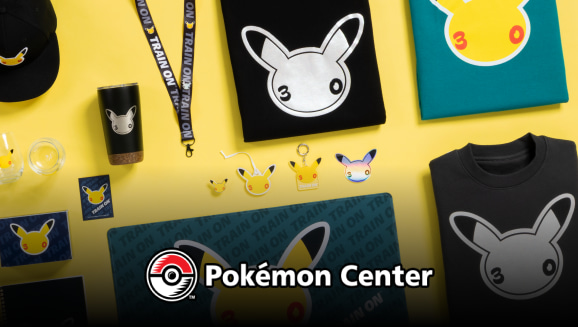
Whether you want to treat yourself or grab a gift for a friend, you can check out the 30th merchandise collection online at the Pokémon Center.
Pokémon’s 30th celebration has just begun! Stay tuned to see what else is in store throughout 2026.
Apple and the Apple logo are trademarks of Apple Inc., registered in the U.S. and other countries. App Store is a service mark of Apple Inc.
Android, Google Play, and the Google Play logo are trademarks of Google, LLC.
Question of the day - Do you view collectibles like Pokemon cards as legitimate investments, or is the market just a bubble?
Today's World, Projecting Tomorrow
Do you view collectibles like Pokemon cards as legitimate investments, or is the market just a bubble?
Subscribe to our newsletter
Daily archives
Current Survey
Top 5 Contributors (Aug)

20209 pts

12060 pts

10714 pts

10417 pts

10117 pts