




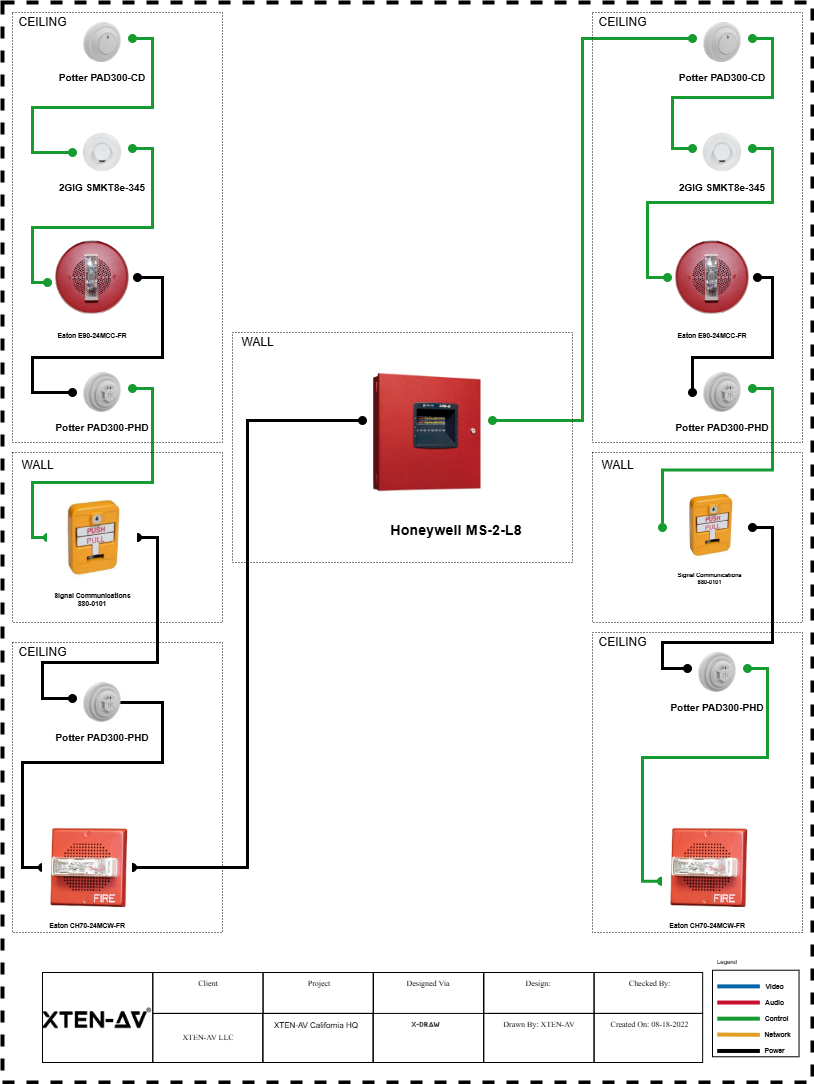
For enterprise-level buildings — large offices, campuses, hotels, hospitals, high‑rises or industrial complexes — fire safety is not just about installing a few detectors. These environments demand a fire alarm system that is accurate, scalable, reliable and capable of integrating with other building safety and management systems. That is why addressable fire alarm systems are widely regarded as the best choice for enterprise-grade deployments. This blog explains what makes an addressable system ideal, the characteristics you should look for when selecting one, and how to choose the best fit for a major installation.
Why Addressable Systems Suit Enterprise Environments
An addressable fire alarm system assigns a unique digital “address” to each detection device — smoke detectors, heat detectors, manual pull stations, and more. When an alarm or fault occurs, the control panel immediately identifies exactly which device triggered it (for example, “Smoke Detector – Floor 12, Zone B, Room 1205”) rather than simply indicating a broad zone.
This precise identification dramatically speeds up response time, minimizes disruption, and improves safety — especially in large or complex buildings where quickly locating the source of alarm can save lives and limit damage.
Moreover, addressable systems use loop‑based wiring (signalling line circuits, SLCs) rather than separate wiring per zone. This reduces cabling requirements and simplifies installation in sprawling or multi‑story buildings, which can lower installation time and cost compared to conventional zone‑based systems.
Overall, the flexibility, scalability, and intelligence of addressable systems make them the natural choice when you need reliable fire safety across many devices, floors or sub‑areas.
Key Features to Look for in an Enterprise-Grade Addressable System
When choosing an addressable fire alarm system for a large deployment, certain features are especially important.
- Precise Device-Level Identification: Each detector or device must report its exact address. This allows rapid localization of fire or fault events and targeted response.
- Scalability & Loop Capacity: The system should support a large number of devices across multiple loops, allowing expansion as the facility grows.
- Self‑Diagnostics and Health Monitoring: The system should monitor device status — faults, contamination, maintenance needs — and alert administrators proactively. This reduces maintenance overhead and improves reliability
- Programmable Alarm Logic & Integration: The control panel should support programmable logic — for example, triggering different alarm sequences, integrating with building management systems (BMS), triggering HVAC shutdown, fire doors, suppression etc.
- Flexible Notification and Evacuation Control: Addressable systems should support selective notification — e.g. alarms on specific floors, voice evacuation, staged or phased evacuation for multi‑tenant or high‑rise buildings.
- Compliance and Certification: The system and its components should meet recognized safety and fire code standards (for example UL certification or relevant regional standards) to ensure reliability, insurance compliance, and regulatory acceptance.
- Ease of Maintenance and Testing: With many devices in a large deployment, the system should support easy maintenance routines, device-by-device testing, and clear logs for audits. Self‑diagnostics and remote monitoring can significantly reduce maintenance efforts.
Use Cases Where Addressable Systems Excel
Enterprise-grade addressable fire alarm systems shine in environments where complexity, occupancy, safety and regulatory compliance are critical. Some examples:
- High-rise office buildings and multi-tenant towers where individual floor or even room-level identification of an alarm is crucial.
- Hospitals and healthcare facilities, where precise location detection and integration with other life‑safety systems are needed.
- Large hotels or commercial buildings with many rooms, public areas, and mixed occupancy — allowing staged evacuations and minimizing false alarms.
- Industrial facilities, factories or warehouses where environmental conditions demand robust detection, routine maintenance, and integration with suppression systems
- Educational institutions and campuses with multiple buildings, requiring centralized monitoring and scalable systems.
Weighing Costs: Initial Investment vs Long-Term Value
It is true that addressable systems generally have a higher upfront cost than conventional zone‑based alarms due to smarter control panels and more advanced devices.
However, for enterprise deployments the higher initial cost is usually offset by lower long‑term costs, easier installation (less wiring), reduced maintenance burden, less disruption from false alarms, and faster incident response.
Over the lifetime of the system — often a decade or more — these factors yield a more cost‑effective and safer solution overall.
Selecting the Right Vendor and System
When evaluating addressable fire alarm systems for an enterprise deployment you should:
- Choose vendors or brands with proven track records and certified hardware — systems must meet local fire safety and building code standards.
- Ensure the system supports all required detection types — smoke, heat, multi‑sensor, manual pull stations, notification appliances, integration modules etc.
- Confirm scalability — enough loops and device capacity for current layout and future expansion.
- Check that maintenance, self‑diagnosis, and reporting features are supported (fault detection, contamination alerts, device health monitoring).
- Confirm that integration with building systems (BMS, HVAC, access control, sprinklers) is possible if needed — especially for large, complex buildings or campuses.
- Evaluate user interface — control panels should be intuitive for facility managers, enable quick identification of alarms, isolate faults, and support event logging and reporting.
Conclusion
For enterprise‑level deployments, an addressable fire alarm system is the best choice when you need precision, scalability, flexibility, safety, and reliability. With unique addressing of devices, loop‑based wiring, self‑diagnostics, programmable logic, and integration capabilities, these systems deliver superior fire detection and response compared to conventional zone-based alarms.
Although the initial cost may be higher, the long-term value in terms of safety, maintenance, reduced disruptions and regulatory compliance makes addressable systems the smart investment for large buildings, campuses, hotels, hospitals, industrial facilities and any facility where fire safety matters. By carefully selecting a system with the right features and working with a certified vendor, enterprises can ensure comprehensive protection and peace of mind.
Comments