




Standing in front of a pump selection guide with dozens of model numbers, shaft lengths, material options, and seal types can feel overwhelming. You know you need a vertical slurry pump for your sump, but which one? Order the wrong model, and you could end up with a pump that is too small, too large, or made of the wrong material for your slurry. CNSME PUMP offers a range of vertical slurry pump models, each optimized for different duties. The good news is that making the right choice follows a logical process. You do not need to be a pump engineer to get it right. You just need to answer a few key questions about your application. Let me walk you through the selection criteria so you can confidently choose the CNSME model that will serve you reliably for years.
Matching Flow Rate and Total Dynamic Head
The first and most important decision is hydraulic. You need a pump that delivers the right flow rate at the right pressure. Flow rate is usually simple: how many gallons per minute or cubic meters per hour need to move from the sump to the destination? Head is trickier. Total dynamic head includes the vertical lift from the sump water level to the discharge pipe outlet, plus friction losses in the pipe, plus any pressure required at the destination. Underestimating head is a common mistake. A pump that can handle the flow at low head will stall or run off its curve if the actual head is higher. Overestimating head is also a problem. A pump that is too large for the required head will operate far to the right on its curve, potentially overloading the motor or causing cavitation. CNSME provides performance curves for each model. Your job is to plot your required flow and head on that curve. The operating point should fall within the pump’s best efficiency zone—typically between sixty and one hundred ten percent of the best efficiency point flow. If you are unsure about your system head, add ten to fifteen percent margin. Better to oversize slightly than to undersize and have insufficient flow.
Determining Required Shaft Length for Your Sump
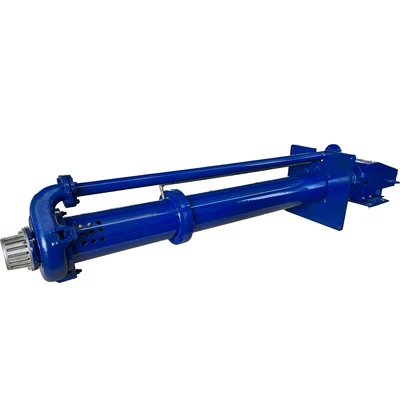
Vertical pumps are defined by their shaft length, which determines how deep the impeller sits in your sump. Measure from the mounting surface—where the pump’s top plate will sit—down to the sump floor. Now subtract the distance you want between the impeller intake and the floor. For most slurries, six to twelve inches of clearance is ideal. Too much clearance leaves settled solids unreachable. Too little clearance risks sucking debris directly off the bottom or blocking the intake. The result is your required shaft length. For example, a sump that is sixty inches deep with a desired eight-inch floor clearance needs a fifty-two-inch shaft. CNSME offers standard shaft lengths in increments, typically six inches, so you would order the nearest size. If your sump is deeper than standard, custom shaft lengths are available. Do not guess on this measurement. A shaft that is too short leaves slurry behind. A shaft that is too long may bottom out or prevent the mounting plate from seating properly. Measure carefully, and if possible, measure twice.
Selecting Wet End Material Based on Slurry Analysis
This decision has the biggest impact on pump life. The wrong material will fail quickly no matter how well you maintain the pump. Start by characterizing your slurry. Is it abrasive? Use a simple jar test. Shake a sample and let it settle. Sharp, hard particles that settle quickly suggest high-chrome white iron. Soft, rounded particles or fibrous material suggest rubber. Next, test the pH. Litmus paper or a simple pH meter will tell you if the slurry is acidic or alkaline. High-chrome resists abrasion but corrodes below pH 5 and above pH 11. Rubber resists mild acids and alkalis but fails in strong oxidizing acids or oils. For slurries that are both abrasive and corrosive, consider polyurethane or ceramic. For extremely aggressive chemical duty, stainless steel or titanium wet ends are necessary. If you are unsure, send a slurry sample to CNSME for analysis. Their application engineers can recommend the optimal material based on particle size distribution, hardness, pH, and temperature. This service is free and can prevent a costly material mismatch.
Choosing Between Cantilever and Bearing Pump Designs
CNSME offers two main vertical pump architectures. The cantilever design has no lower bearing. The shaft is supported only at the top. This design is ideal for dirty, abrasive slurries because there is no submerged bearing to fail. It also tolerates some dry running. The limitation is shaft length. Cantilever pumps are practical to about eight feet of shaft length. Beyond that, the shaft becomes too flexible. The bearing pump design uses one or more intermediate bearings along the shaft. This allows much longer shafts—twenty feet or more—but introduces submerged bearings that require flush water and regular maintenance. For most sump applications with shafts under six feet, choose cantilever. The reliability advantage is overwhelming. For deep sumps, tunnels, or mine shafts, you may need a bearing pump. If you do, specify the flush water system carefully and plan for regular bearing inspections. Many operators have learned to redesign their sumps to use cantilever pumps rather than deal with the maintenance of submerged bearings.
Identifying the Right Seal Type for Your Environment
CNSME vertical pumps offer several sealing options, and the right choice depends on your plant conditions. The labyrinth seal is the simplest and most reliable for clean to moderately dirty slurries. It uses no water or air and requires almost no maintenance. Use it unless you have a reason not to. The air purge seal is better for very abrasive slurries or when the pump runs intermittently. The positive air flow keeps slurry away from the seal faces. You need a source of clean, dry compressed air at low pressure. The mechanical seal is necessary for hazardous or valuable slurries where zero leakage is mandatory. It requires a flush plan—usually a water or barrier fluid system. The packing gland is the oldest technology, still useful for very high temperatures or when other seals fail. It leaks intentionally at a controlled rate, so it is not for clean operations. When in doubt, choose the labyrinth seal for general slurry duty. It is forgiving, inexpensive, and reliable.
Sizing the Motor for Your Power Supply
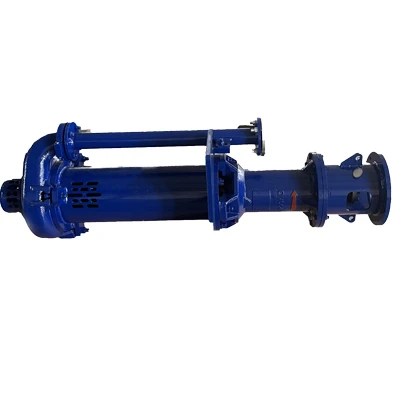
Motor selection is often the last consideration, but it matters. CNSME pumps can be fitted with motors from fractional horsepower up to several hundred horsepower. The key decisions are voltage, enclosure, and efficiency rating. Match the motor voltage to your plant’s supply. Common options include 230/460V three-phase, 575V, and high-voltage motors for large pumps. The enclosure type matters for the environment. TEFC (Totally Enclosed Fan Cooled) is standard for most industrial settings. Explosion-proof enclosures are required for flammable atmospheres. Efficiency rating affects both operating cost and sustainability. Premium efficiency motors cost more upfront but pay back in energy savings, especially for continuous-duty pumps. For pumps that run intermittently, standard efficiency may be sufficient. Also consider a variable frequency drive if your flow requirements vary. A VFD allows the pump to ramp up and down, reducing energy use and wear during low-demand periods. CNSME can supply the pump with or without a motor, but buying a matched motor and pump ensures proper alignment and warranty coverage.
Reviewing Installation Constraints and Accessories
Finally, consider the physical realities of your installation. What is the clearance above the sump for removing the pump? CNSME vertical slurry pump need overhead space equal to the shaft length plus motor height. If you have low headroom, ask about a split-shaft design or a pump that can be disassembled in place. What is the discharge pipe size and orientation? Standard pumps have a horizontal discharge above the mounting plate, but flanged, victaulic, or threaded connections are available. Do you need a suction strainer? For sumps with large debris, a bar screen prevents clogging. Do you need a vortex breaker? For sumps with high inlet velocities, a simple plate prevents air ingestion. Do you need a lifting lug or eyebolts? These make installation and removal safer. Review all these details before ordering. A pump that is technically correct but physically impossible to install or service is not the right pump. CNSME’s application engineers can help you identify potential installation issues and recommend accessories to address them. Taking the time to get these details right upfront saves frustration and additional orders later.
Comments