




How did you sleep last night?
No matter how you answer this question, you may rest easier knowing that you are not alone.
Sleep issues can affect people of all ages and impact many parts of our lives.
While the science and nature of sleep is too complex to sum up on a single page, taking a peek at sleep statistics nationwide can help you understand key aspects of sleep health, as well as how widespread sleep issues are.
Our Sleep Cycles
Understanding the science of sleep
In a normal sleep period, a person experiences four to six sleep cycles Trusted SourceNational Center for Biotechnology InformationThe National Center for Biotechnology Information advances science and health by providing access to biomedical and genomic information.View Source .
- While cycles vary in length, each sleep cycle can last about 90 minutes.
- Rapid eye movement (REM) sleep makes up 20% to 25% of total sleep in healthy adults.
- As you cycle through non-rapid eye movement (NREM) sleep, various bodily functions slow down or stop altogether. Metabolism drops by around 15% Trusted SourceNational Library of Medicine, Biotech InformationThe National Center for Biotechnology Information advances science and health by providing access to biomedical and genomic information.View Source and both heart rate and blood pressure go down.
- Stage 3 NREM sleep or “deep sleep” is believed to be the most critical stage of sleep for regenerating your body and brain. Deep sleep decreases across the lifespan, with one receiving less deep sleep as they age.
- On average, we spend about two hours per night dreaming Trusted SourceNational Institute of Neurological Disorders and Stroke (NINDS)NINDS aims to seek fundamental knowledge about the brain and nervous system and to use that knowledge to reduce the burden of neurological disease.View Source , mostly during REM sleep.
- On average, adults sleep on their side 54% of the time Trusted SourceNature and Science of SleepView Source , on their back 38% of the time, and on their stomach 7%.
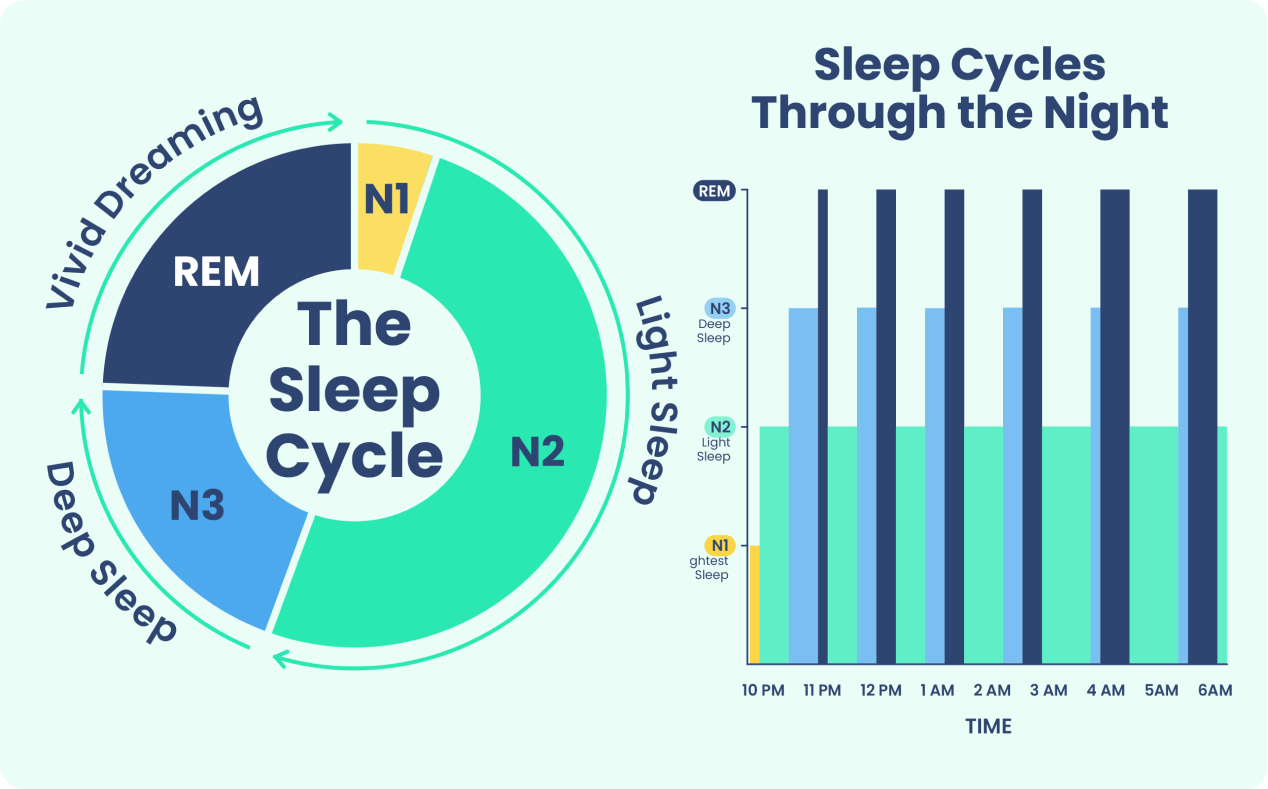
The sleep cycle repeats several times throughout a single sleep period. During each cycle, time spent in each stage of sleep shifts.
Infographic: Sleep Foundation
How Much We Sleep
Are we really getting enough sleep?
Adults need seven or more hours Trusted SourceJournal of Clinical Sleep Medicine (JCSM)JCSM is the official, peer-reviewed journal of the American Academy of Sleep Medicine.View Source of sleep per night.
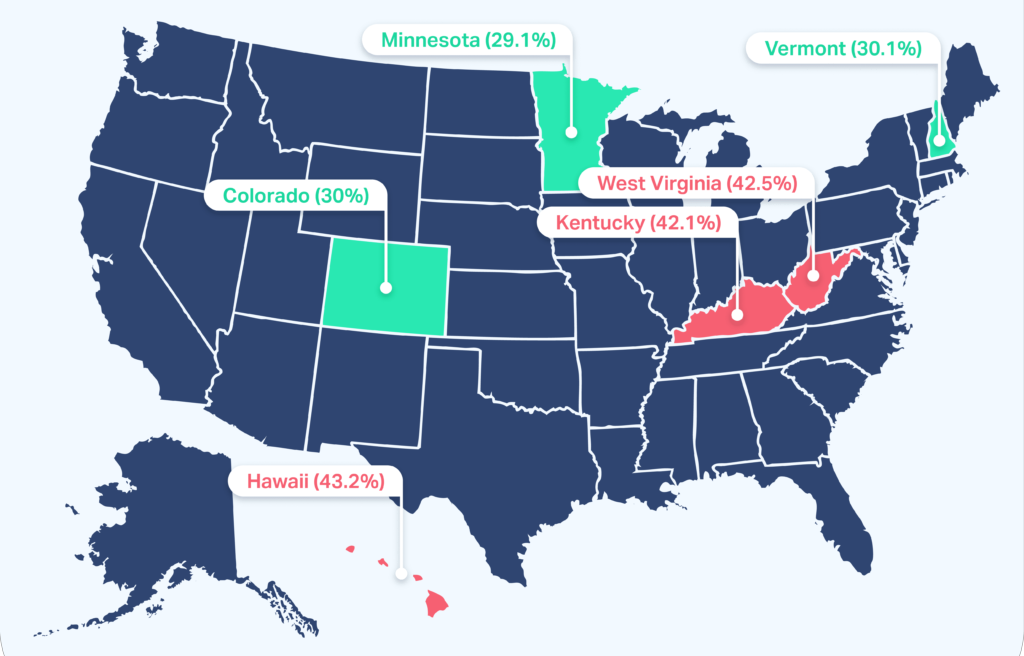
While the states Hawaii, Kentucky, and West Virginia reported the worst sleep, the states Colorado, Minnesota, and Vermont reported the best sleep.
Infographic: Sleep Foundation
- More than one-third Trusted SourceNational Library of Medicine, Biotech InformationThe National Center for Biotechnology Information advances science and health by providing access to biomedical and genomic information.View Sourceof adults sleep less than seven hours per night, on average.
- Among all states, Hawaii has the highest percentage of adults (43%) who get seven or fewer hours of sleep each night. | Learn more
- Among U.S. counties, Boulder County in Colorado has the lowest percentage of adults (23%) Trusted SourceCenters for Disease Control and Prevention (CDC)As the nation’s health protection agency, CDC saves lives and protects people from health threats.View Source who get seven or fewer hours of sleep each night.
7% of adults nap every day.
- 81% of adults have taken a nap of 10 minutes or longer in the past three months. | Learn more
- The average nap is about one hour.
Work and Sleep
The link between sleep quality and work performance
Insufficient sleep has an estimated economic impact of more than $411 billion Trusted SourceNational Library of Medicine, Biotech InformationThe National Center for Biotechnology Information advances science and health by providing access to biomedical and genomic information.View Source each year in the United States alone.
- 4.8 of 10 workers say they are regularly tired during the day, and 7 of 10 say they are tired when their work day is done. | Learn more
- Active-duty service members are 34% more likely Trusted SourceNational Library of Medicine, Biotech InformationThe National Center for Biotechnology Information advances science and health by providing access to biomedical and genomic information.View Source to report insufficient sleep than people with no history of military service.
- 55% of nurses say they experience insomnia. | Learn more
- Drowsy driving is responsible for more than 6,000 fatal car crashes Trusted SourceNational Library of Medicine, Biotech InformationThe National Center for Biotechnology Information advances science and health by providing access to biomedical and genomic information.View Source every year in the United States.
- One study estimates the annual cost of workplace errors and accidents linked to insomnia at $31.1 billion Trusted SourceNational Library of Medicine, Biotech InformationThe National Center for Biotechnology Information advances science and health by providing access to biomedical and genomic information.View Source .
Snoring and Sleep
How often do we snore
About 57% of men, 40% of women, and 27% of children Trusted SourceMerck ManualFirst published in 1899 as a small reference book for physicians and pharmacists, the Manual grew in size and scope to become one of the most widely used comprehensive medical resources for professionals and consumers.View Sourcesnore in the U.S.
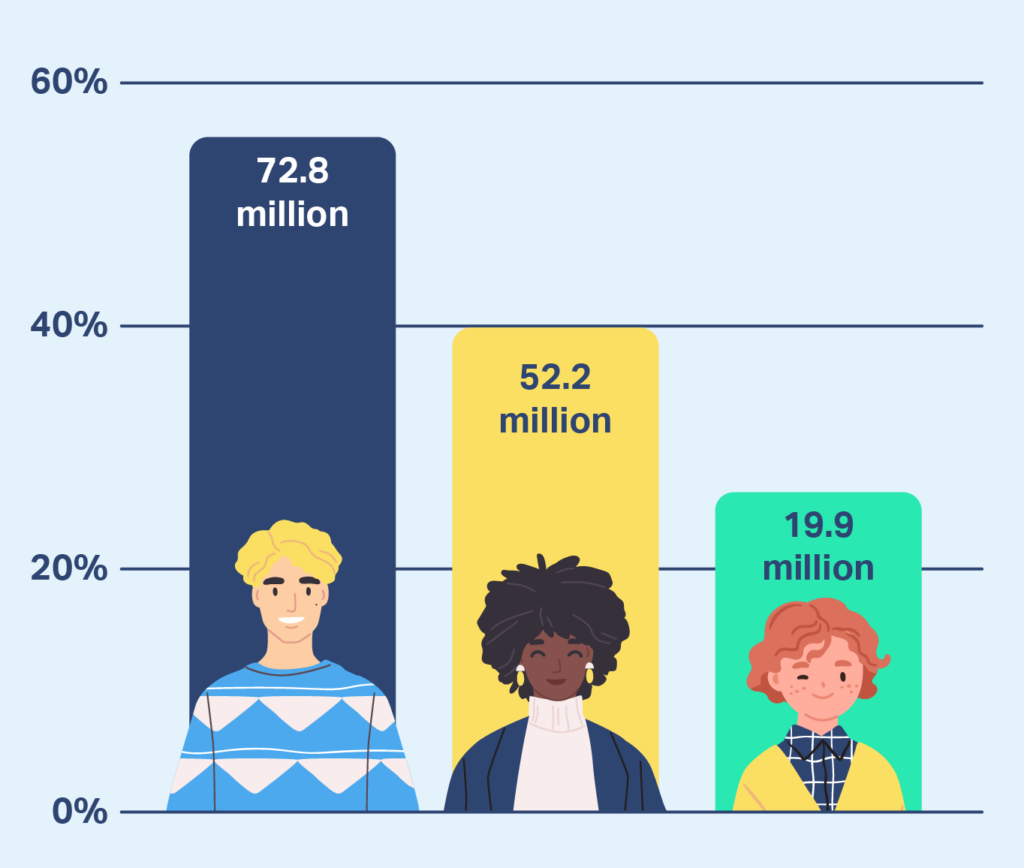
According to U.S. census data, over 70 million men, over 50 million women, and almost 20 million children snore.
Infographic: Sleep Foundation
- Up to 70% of snorers have been diagnosed with sleep apnea Trusted SourceNational Library of Medicine, Biotech InformationThe National Center for Biotechnology Information advances science and health by providing access to biomedical and genomic information.View Source .
- Obstructive sleep apnea (OSA) affects around one billion adults worldwide, with 80-90% of cases Trusted SourceNational Library of Medicine, Biotech InformationThe National Center for Biotechnology Information advances science and health by providing access to biomedical and genomic information.View Source going undiagnosed.
- A 10% increase Trusted SourceJAMA NetworkJAMA and the Specialty Journals help readers stay up to date with the latest research, author interviews, apps, and learning courses.View Source in body weight may make you six times more likely to have OSA.
- Some 1% of adults ages 40 and older Trusted SourceSleepView Source experience central sleep apnea (CSA).
Insomnia and Sleep
Why we struggle to fall asleep and stay asleep
Up to two-thirds of adults occasionally experience insomnia symptoms
- 10-15% of people Trusted SourceUpToDateMore than 2 million healthcare providers around the world choose UpToDate to help make appropriate care decisions and drive better health outcomes. UpToDate delivers evidence-based clinical decision support that is clear, actionable, and rich with real-world insights.View Source experience chronic insomnia, a type of insomnia that persists over multiple months
- Women are 40% more likely Trusted SourcePhilosophical Transactions of the Royal SocietyView Source to have insomnia than men are.
- According to a 2020 study Trusted SourceOxford Academic Journals (OUP)OUP publishes the highest quality journals and delivers this research to the widest possible audience.View Source , 58% of a sample of post-9/11 veterans screened positive for insomnia.
- Up to 75% of older adults experience symptoms of insomnia. According to a 2019 study, incidences of multiple physical and psychiatric disorders are higher in older adults with insomnia Trusted SourceNational Library of Medicine, Biotech InformationThe National Center for Biotechnology Information advances science and health by providing access to biomedical and genomic information.View Source than those without.
Other Sleep Disorders
Common sleep disorders keeping us up
According to estimates, 50 million to 70 million people Trusted SourceNational Heart, Lung, and Blood Institute (NHLBI)The NHLBI is the nation's leader in the prevention and treatment of heart, lung, blood and sleep disorders.View Source have ongoing sleep disorders. The most common among them are insomnia, sleep apnea, and narcolepsy.
- Sleep disorders Trusted SourceNational Library of Medicine, Biotech InformationThe National Center for Biotechnology Information advances science and health by providing access to biomedical and genomic information.View Source affect 39% to 47% of perimenopausal women and 35% to 60% percent of postmenopausal women.
- 76% of adults with a sleep issue or disorder share a household with at least one other person who does. 42% of people agree that sleep issues run in their family. | Learn more
- You may exert as much as 250 pounds of force when you grind your teeth. | Learn more
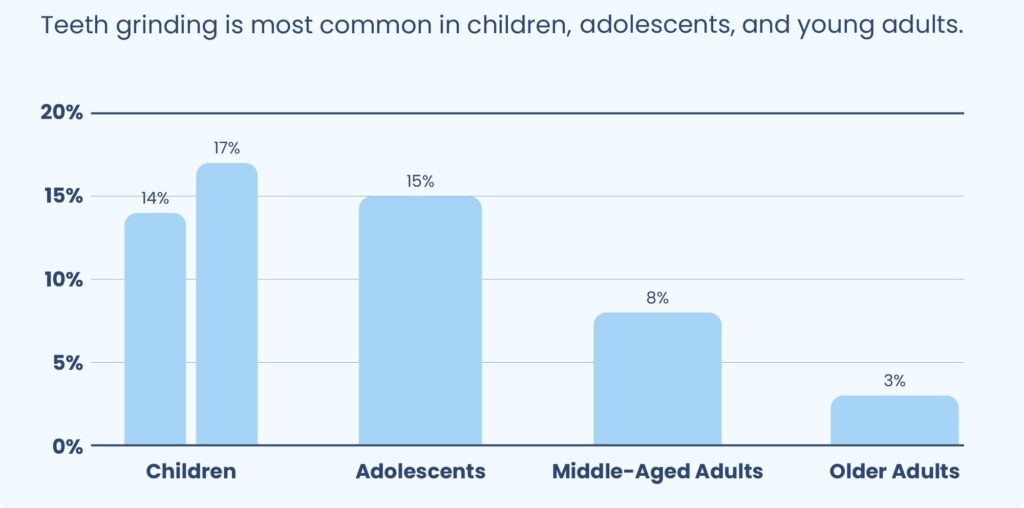
Between 14% and 17% of children grind their teeth during sleep, however the prevalence decreases with age with 15% of adolescents, 8% of adults, and 3% of older adults experiencing bruxism.
Infographic: Sleep Foundation
- Restless legs syndrome (RLS) Trusted SourceMedline PlusMedlinePlus is an online health information resource for patients and their families and friends.View Source affects 5% to 10% of adults and 2% to 4% of children. | Learn more
- 1 in every 2,000 adults Trusted SourceMedline PlusMedlinePlus is an online health information resource for patients and their families and friends.View Source has narcolepsy. In the U.S., that equates to about 165,950 people.
- People with irritable bowel syndrome (IBS) are 37.6% more likely Trusted SourceSaudi Journal of GastroenterologyView Source than others to have a sleep disorder.
- 66% of adults say they have talked in their sleep Trusted SourceSleep Medicine ResearchSleep Medicine Research (Sleep Med Res) is an official journal of the Korean Society of Sleep Medicine (KSSM), Asian Society of Sleep Medicine (ASSM), Korean Society of Sleep Research, and Korean Society of Sleep and Breathing.View Source .
- 23% of adults say they have had a sleepwalking episode Trusted SourceCenters for Disease Control and Prevention (CDC)As the nation’s health protection agency, CDC saves lives and protects people from health threats.View Source .
- 8% of people have had an episode of sleep paralysis Trusted SourceSleep Medicine ResearchSleep Medicine Research (Sleep Med Res) is an official journal of the Korean Society of Sleep Medicine (KSSM), Asian Society of Sleep Medicine (ASSM), Korean Society of Sleep Research, and Korean Society of Sleep and Breathing.View Source .
Common Sleep Disruptions
How interrupted sleep can affect you
Nighttime disruptions may cause sleep fragmentation and reduce time spent in the deep sleep.
- Noise may disrupt sleep and increase production of the hormones adrenaline and cortisol, as well as increase heart rate and blood pressure Trusted SourceNational Library of Medicine, Biotech InformationThe National Center for Biotechnology Information advances science and health by providing access to biomedical and genomic information.View Source .
- 69% of men ages 40 and older and 76% of women in that age group get up to go to the bathroom at least once per night Trusted SourceNational Center for Biotechnology InformationThe National Center for Biotechnology Information advances science and health by providing access to biomedical and genomic information.View Source .
- 41% of primary care patients Trusted SourceNational Library of Medicine, Biotech InformationThe National Center for Biotechnology Information advances science and health by providing access to biomedical and genomic information.View Source say that they experienced night sweats at least once a month.
- 95% of adults lose at least an hour of sleep to pain in a given week. | Learn more
- 63% of adults Trusted SourceNational Library of Medicine, Biotech InformationThe National Center for Biotechnology Information advances science and health by providing access to biomedical and genomic information.View Source with heartburn say it has affected their ability to sleep well.
- Premenstrual syndrome (PMS) makes women at least two times as likely Trusted SourceNational Library of Medicine, Biotech InformationThe National Center for Biotechnology Information advances science and health by providing access to biomedical and genomic information.View Source to report insomnia-like symptoms before and during their period.
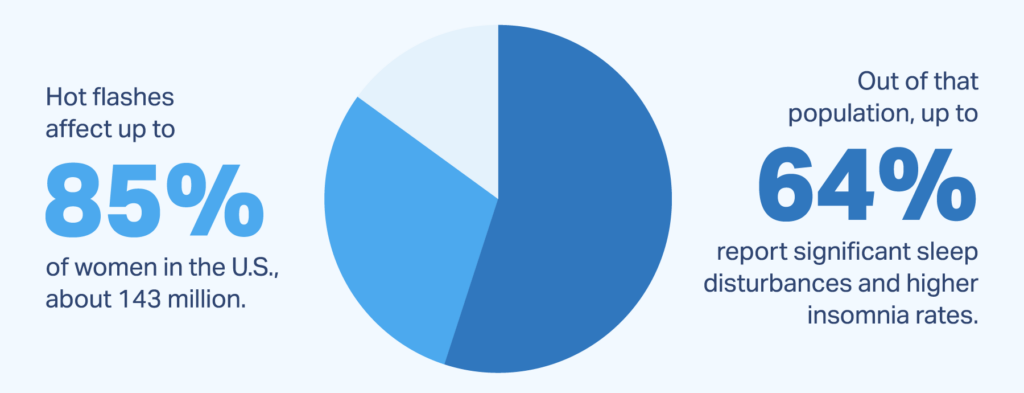
About 143 million women in the U.S. are affected by hot flashes. Approximately 64% of that population also experience sleep issues and insomnia.
Infographic: Sleep Foundation
Pregnancy and Sleep
The relationship between pregnancy and sleep
Around 50% of people who are pregnant Trusted SourceNational Library of Medicine, Biotech InformationThe National Center for Biotechnology Information advances science and health by providing access to biomedical and genomic information.View Source experience insomnia-like symptoms.
- Sleeping on the left side with the legs slightly curled is considered the best sleeping position for pregnancy.
- As many as 50% of pregnant people Trusted SourceUpToDateMore than 2 million healthcare providers around the world choose UpToDate to help make appropriate care decisions and drive better health outcomes. UpToDate delivers evidence-based clinical decision support that is clear, actionable, and rich with real-world insights.View Source snore, with snoring typically getting worse during the third trimester.
- Obstructive sleep apnea affects as many as 1 in 5 people Trusted SourceNational Library of Medicine, Biotech InformationThe National Center for Biotechnology Information advances science and health by providing access to biomedical and genomic information.View Source during pregnancy.
- Restless legs syndrome affects up to one third of people Trusted SourceNational Library of Medicine, Biotech InformationThe National Center for Biotechnology Information advances science and health by providing access to biomedical and genomic information.View Source during their third trimester.
- Having a sleep disorder during pregnancy may increase the odds of a premature birth by 40%. |Learn more
Children and Sleep
The importance of sleep during adolescence
Babiesspend more than half Trusted SourceNational Library of Medicine, Biotech InformationThe National Center for Biotechnology Information advances science and health by providing access to biomedical and genomic information.View Source of their time sleeping.
- Babies up to 1 year old need 12 to 16 hours of sleep each day, including naps.
- Babies born prematurely may spend around 90% of their day asleep.
- Sudden infant death syndrome (SIDS) is a leading cause of death for babies younger than 1 year old.
- More than twice as many Trusted SourceCenters for Disease Control and Prevention (CDC)As the nation’s health protection agency, CDC saves lives and protects people from health threats.View Source of SIDS deaths occur among non-Hispanic Black, American Indian, and Alaska Native babies per 100,000 live births than non-Hispanic white babies. | Learn more
20% to 30% of children have trouble falling asleep or staying asleep Trusted SourceUpToDateMore than 2 million healthcare providers around the world choose UpToDate to help make appropriate care decisions and drive better health outcomes. UpToDate delivers evidence-based clinical decision support that is clear, actionable, and rich with real-world insights.View Source .
Ages 1 to 2 need 11 to 14 hours of sleep.
Ages 3 to 5 need 10 to 13 hours of sleep.
Ages 6 to 12 need 9 to 12 hours of sleep.
- According to estimates, 10% to 50% of children ages 3 to 6 have occasional nightmares Trusted SourceAmerican Academy of Sleep Medicine (AASM)AASM sets standards and promotes excellence in sleep medicine health care, education, and research.View Source .
- Kids share a bedroom in 70% of households with two or more children. |Learn more
- 30.8% of parents and guardians say their school-age children are not getting enough sleep. | Learn more
- As many as 70% of children with ADHD have mild to severe sleeping problems Trusted SourceNational Library of Medicine, Biotech InformationThe National Center for Biotechnology Information advances science and health by providing access to biomedical and genomic information.View Source .
- Children who lose 39 minutes of sleep or more Trusted SourceJAMA NetworkJAMA and the Specialty Journals help readers stay up to date with the latest research, author interviews, apps, and learning courses.View Source have a harder time coping at school and typically feel worse than those getting enough sleep.
For teens between the ages of 13 to 19, average total sleep per night drops by 40 to 50 minutes Trusted SourceNational Library of Medicine, Biotech InformationThe National Center for Biotechnology Information advances science and health by providing access to biomedical and genomic information.View Source .
- 58% of middle schoolers and 72% of high school students get less than the recommended amount Trusted SourceCenters for Disease Control and Prevention (CDC)As the nation’s health protection agency, CDC saves lives and protects people from health threats.View Source of sleep for their age.
- 78% of adults say getting enough sleep is more important than being successful at a video game, compared to 60% of adolescents. | Learn more
- Adolescents push their bedtime back by 16 minutes Trusted SourceNational Library of Medicine, Biotech InformationThe National Center for Biotechnology Information advances science and health by providing access to biomedical and genomic information.View Source for every 30 minutes they spend playing video games.
Parents and Sleep
Coping with sleep loss as a new parent
Sleep satisfaction and duration significantly decrease immediately after the birth of a child, with the effects lasting up to 6 years. Trusted SourceOxford Academic Journals (OUP)OUP publishes the highest quality journals and delivers this research to the widest possible audience.View Source
- New mothers are shown to lose 62 minutes of sleep on average, compared to 13 minutes for new fathers.
- 43% of single parents Trusted SourceCenters for Disease Control and Prevention (CDC)As the nation’s health protection agency, CDC saves lives and protects people from health threats.View Source sleep less than seven hours per night, compared to 33% of adults in two-parent homes and 31% of adults with no children.
- 36% of parents Trusted SourceNational Library of Medicine, Biotech InformationThe National Center for Biotechnology Information advances science and health by providing access to biomedical and genomic information.View Source bed share with their children between the ages of 2-5.
Mental Health and Sleep
The connection between our emotional health and sleep
40% of people with insomnia Trusted SourceJAMAJAMA, published continuously since 1883, is an international peer-reviewed general medical journal.View Source may have a diagnosable mental health condition.
- 70% of adults with seasonal affective disorder (SAD) feel tired in the winter, compared to 44% of those without it |Learn more
- Individuals with SAD who practice light therapy during the winter are 36% less likely Trusted SourceNational Library of Medicine, Biotech InformationThe National Center for Biotechnology Information advances science and health by providing access to biomedical and genomic information.View Source to experience a depressive episode.
- 83% of adults Trusted SourceNational Library of Medicine, Biotech InformationThe National Center for Biotechnology Information advances science and health by providing access to biomedical and genomic information.View Source with depression may have at least one symptom of insomnia.
- 54% of adults say stress and anxiety were the top reasons they have trouble falling asleep. Sunday was the night of the week in which they had the most trouble falling asleep. |Learn more
- As much as 91% of adults Trusted SourceCNS DrugsView Source with post-traumatic stress disorder (PTSD) have symptoms of insomnia.
- 80% of people with PTSD have nightmares within three months of experiencing trauma.
- Wildfires can cause as much as 135 hours of lost sleep per year for adults. 77% of adults who have lost sleep to wildfires cite anxiety as the reason. |Learn more
Bedtime Rituals and Sleep
How bedtime rituals impact our sleep
Watching TV is the top bedtime ritual among U.S. adults, with 53% of people saying they do it before bed.
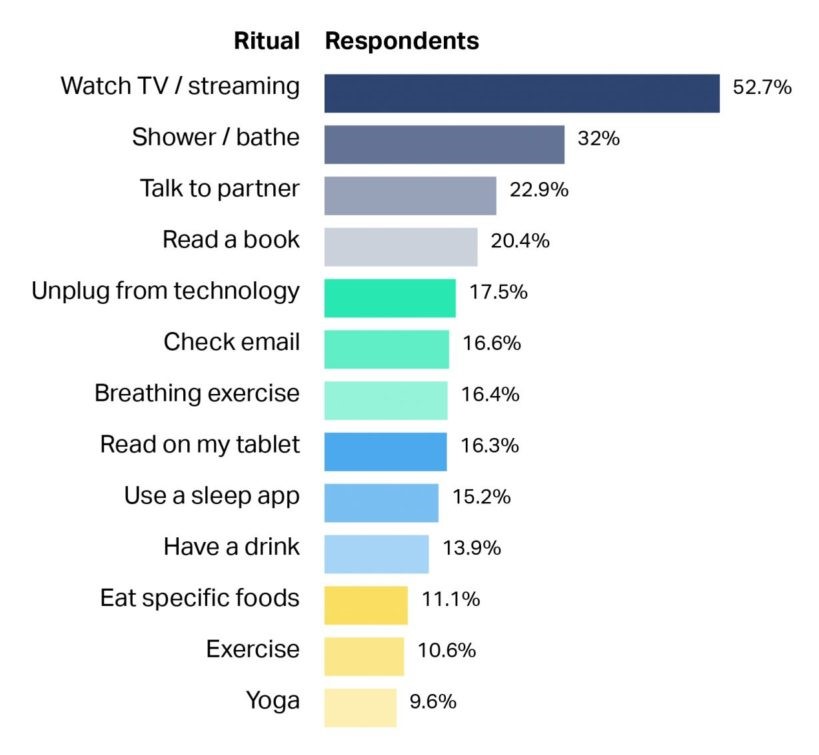
TV watching is the most commonly reported activity before bed, despite the potential consequences on sleep.
Infographic: Sleep Foundation
- 50% of people who watch TV before bed get less than seven hours of sleep. | Learn more
- 53% of adults sleep with their bedroom windows closed and 61% sleep with their door closed. | Learn more
- 58% of adults who shower or bathe before bed say that doing so helps them sleep |Learn more
- Adults in the U.S. spend 3 hours, 30 minutes on social media before bed every night. YouTube is the most popular social media platform used before bed, with 74% of SleepFoundation.org survey respondents using it. |Learn more
Melatonin and Sleep
Understanding the sleep hormone
88% of adults who take melatonin say it helps them fall asleep faster.
- 56% of adults have consumed at least one sleep aid in the past month, 49% of adults have used melatonin, which is the most popular sleep aid. | Learn more
- The average melatonin dosage for adults is 4.8 milligrams. 71% of adults take 5 milligrams of melatonin or less. | Learn more
- On average, adults who take melatonin do it 211 days each year. 39% of adults take melatonin every day.
- Melatonin use increased 425% between 1999 and 2018 Trusted SourceJAMA NetworkJAMA and the Specialty Journals help readers stay up to date with the latest research, author interviews, apps, and learning courses.View Source among adults.
- 88% of melatonin products Trusted SourceJAMA NetworkJAMA and the Specialty Journals help readers stay up to date with the latest research, author interviews, apps, and learning courses.View Source are inaccurately labeled. An analysis of melatonin supplements found that they may include 347% more melatonin per dose than what is on the label.
- 46% of parents report giving melatonin to their children under 13 to help them fall asleep. | Learn More
Sleep Aids and Sleep
The prevalence and influence of sleep aids
8% of adults say they took medication to help them sleep at least four times Trusted SourceCenters for Disease Control and Prevention (CDC)As the nation’s health protection agency, CDC saves lives and protects people from health threats.View Source in the past week.
- 58% of respondents with seasonal affective disorder use sleep aids, compared to 26% of those without it, according to a SleepFoundation.org survey.
- 79% of adults who take prescription sleep medication experience a residual effect Trusted SourceNational Library of Medicine, Biotech InformationThe National Center for Biotechnology Information advances science and health by providing access to biomedical and genomic information.View Source such as oversleeping, feeling groggy, or having a hard time concentrating the next day.
- 20% of adults Trusted SourceAmerican Academy of Sleep Medicine (AASM)AASM sets standards and promotes excellence in sleep medicine health care, education, and research.View Source use marijuana or cannabidiol (CBD) as a sleep aid.
- 23% of adults have taken Benadryl, or diphenhydramine, as a sleep aid in the past month.
- Sleep trackers are projected to become a $11.2 billion business by 2028 .
- 28% of adults Trusted SourceNational Library of Medicine, Biotech InformationThe National Center for Biotechnology Information advances science and health by providing access to biomedical and genomic information.View Source use a cellphone to track their sleep. These include sleep-tracker apps.
Sex and Sleep
The effects of sleep on sex
Insomnia may be a risk factor for sexual dysfunction, with both insufficient and disrupted sleep linked to a higher risk of erectile dysfunction.
- Getting an extra hour of sleep for women can increase the interest in partnered sexual activity up to 14% Trusted SourceNational Library of Medicine, Biotech InformationThe National Center for Biotechnology Information advances science and health by providing access to biomedical and genomic information.View Source .
- 30% of couples who started sleeping in separate beds cited their sleep habits as the reason. | Learn more
- 8% of patients Trusted SourceAmerican Academy of Sleep Medicine (AASM)AASM sets standards and promotes excellence in sleep medicine health care, education, and research.View Source at a sleep disorders center reported experiencing symptoms of sexsomnia, also known as sleep sex.
- More than 70% Trusted SourceMedicineView Source of people report experiencing a sex dream at least once in their life.
Your Diet and Sleep
What you eat can impact your sleep
Diet and nutrition affect the quality of your sleep and your food choices can make it easier or harder to get the sleep you need.
- Drinking more than two servings of alcohol per day for men and more than one serving per day for women can decrease sleep quality by 39% Trusted SourceNational Library of Medicine, Biotech InformationThe National Center for Biotechnology Information advances science and health by providing access to biomedical and genomic information.View Source .
- 51% of adults who sleep more than normal over Thanksgiving cite overeating and alcohol consumption as the reason. |Learn more
- On average, adults snack before bedtime 3.9 nights each week. Adults who snack on seeds and nuts before bed sleep 32 minutes more, on average, than those who snack on chips, crackers, or pretzels. | Learn more
- Eating within two hours before bed is linked to later bedtimes, trouble falling and staying asleep, and obesity.
Caffeine and Sleep
How coffee and caffeine can hurt our sleep
Most adults can safely consume up to 400 milligrams Trusted SourceNational Library of Medicine, Biotech InformationThe National Center for Biotechnology Information advances science and health by providing access to biomedical and genomic information.View Source of caffeine each day, which is roughly equivalent to four cups of coffee.
- 94% of Americans drink caffeinated beverages, with 64% drinking them every day. | Learn More
- 71% of SleepFoundation.org survey respondents drink coffee every day. 70% think caffeine has an impact on their sleep.
- Top sleep issues reported by caffeine-drinkers include daytime sleepiness, fatigue, and insomnia. 30% of survey respondents reported experiencing anxiety.
- The half-life of caffeine, or the time required for just half of it to be eliminated from the body, is usually 4 to 6 hours, but can be anywhere from 2 to 12 hours.
- Coffee promotes alertness and reduces tiredness by blocking adenosine receptors and preventing its sleep-promoting effects. However, once the effects wear off, people can experience sleepiness and muscle fatigue Trusted SourceNational Library of Medicine, Biotech InformationThe National Center for Biotechnology Information advances science and health by providing access to biomedical and genomic information.View Source .
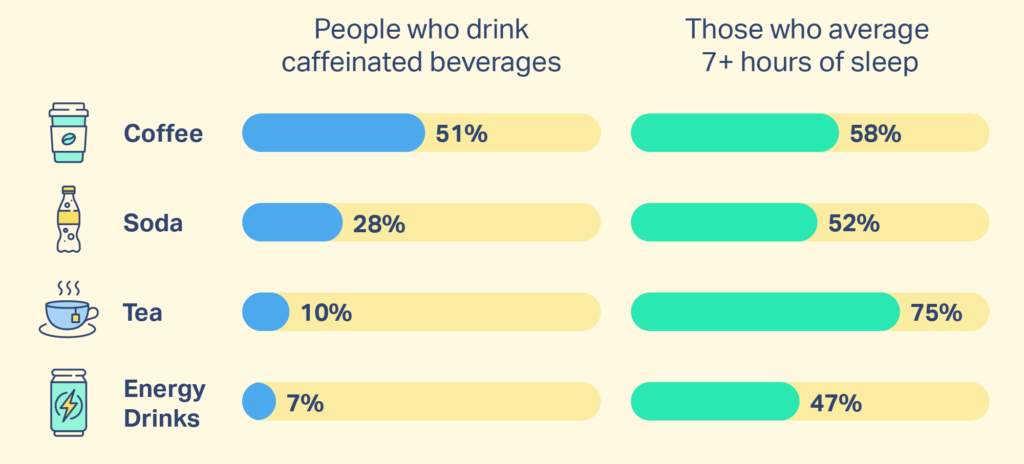
According to a Sleep Foundation poll, the majority of respondents drink coffee regularly and over half of those coffee-drinkers reported difficulty meeting the recommended hours of sleep.
Infographic: Sleep Foundation
Daylight Saving Time and Sleep
Is DST affecting our sleep?
The majority of Americans support abolishing Daylight Saving Time (DST), but legislation to make DST permanent year-round has not been enacted. While it is believed major sleep disruptions are less likely to occur when DST ends, one study Trusted SourceNational Library of Medicine, Biotech InformationThe National Center for Biotechnology Information advances science and health by providing access to biomedical and genomic information.View Source found that in the week after the November time change, people experienced the following:
- 115% increase in difficulty falling asleep
- 103% increase in excessive daytime sleepiness
- 64% increase in difficulty staying asleep
- 34% increase in sleep dissatisfaction
Your environment and sleep
Optimizing Your Bedroom for Better Sleep
Researchers have established a link between using blue light emitting devices before bed and increases in the amount of time it takes someone to fall asleep.
- The median household has five electronic devices, and 18% of homes are hyper-connected Trusted SourcePew Research CenterPew Research Center is a nonpartisan fact tank that informs the public about the issues, attitudes, and trends shaping the world.View Source , containing 10 or more devices.
- 57% of teens Trusted SourceNational Library of Medicine, Biotech InformationThe National Center for Biotechnology Information advances science and health by providing access to biomedical and genomic information.View Source who use technology in the bedroom, such as a television or smartphone, suffer from sleep problems.
The best room temperature for sleep is approximately 65 degrees.
- Your core body temperature generally hovers around 98.6 degrees, but fluctuates by about 2 degrees throughout the night.
- Infants more sensitive to changes in temperature may benefit from a bedroom that is warmer, up to 69 degrees.
- A sleeping environment that is too warm can interfere with the body’s thermoregulation and affect the time spent in different sleep stages Trusted SourceJournal of Physiological AnthropologyView Source . A cold bedroom temperature is not considered to be as detrimental to sleep quality.
References
71 Sources
Patel, A. K., Reddy, V., & Araujo, J. F. (2020). Physiology, Sleep Stages. StatPearls Publishing., Retrieved from
https://www.ncbi.nlm.nih.gov/books/NBK526132/
Sharma, S., & Kavuru, M. (2010). Sleep and metabolism: an overview. International journal of endocrinology, 2010, 270832.
https://pubmed.ncbi.nlm.nih.gov/20811596/
National Institute of Neurological Disorders and Strokes (NINDS). (2019, August 13). Brain basics: Understanding Sleep.
https://www.ninds.nih.gov/health-information/public-education/brain-basics/brain-basics-understanding-sleep
Skarpsno, E. S., Mork, P. J., Nilsen, T., & Holtermann, A. (2017). Sleep positions and nocturnal body movements based on free-living accelerometer recordings: Association with demographics, lifestyle, and insomnia symptoms. Nature and Science of Sleep, 9, 267–275.
https://pubmed.ncbi.nlm.nih.gov/29138608/
Consensus Conference Panel, Watson, N. F., Badr, M. S., Belenky, G., Bliwise, D. L., Buxton, O. M., Buysse, D., Dinges, D. F., Gangwisch, J., Grandner, M. A., Kushida, C., Malhotra, R. K., Martin, J. L., Patel, S. R., Quan, S. F., Tasali, E., Non-Participating Observers, Twery, M., Croft, J. B., Maher, E., … Heald, J. L. (2015). Recommended amount of sleep for a healthy adult: A joint consensus statement of the American Academy of Sleep Medicine and Sleep Research Society. Journal of Clinical Sleep Medicine, 11(6), 591–592.
https://pubmed.ncbi.nlm.nih.gov/25979105/
Liu, Y., Wheaton, A. G., Chapman, D. P., Cunningham, T. J., Lu, H., & Croft, J. B. (2016). Prevalence of healthy sleep duration among adults–United States, 2014. Morbidity and Mortality Weekly Report, 65(6), 137–141., Retrieved March 24, 2023, from
https://pubmed.ncbi.nlm.nih.gov/26890214/
County Health Rankings. (n.d.). Hawaii: Insufficient Sleep., Retrieved March 24, 2023, from
https://www.countyhealthrankings.org/explore-health-rankings/hawaii?year=2022&measure=Insufficient+Sleep*
Centers for Disease Control and Prevention, National Center for Chronic Disease Prevention and Health Promotion, Division of Population Health. (2006). 500 Cities Project Data [online]. Accessed Oct 22, 2020 from, Retrieved March 27, 2023, from
https://www.cdc.gov/places/
Hafner, M., Stepanek, M., Taylor, J., Troxel, W. M., & van Stolk, C. (2017). Why Sleep Matters-The Economic Costs of Insufficient Sleep: A Cross-Country Comparative Analysis. Rand health quarterly, 6(4), 11.
https://pubmed.ncbi.nlm.nih.gov/28983434/
Chapman, D. P., Liu, Y., McKnight-Eily, L. R., Croft, J. B., Holt, J. B., Balkin, T. J., & Giles, W. H. (2015). Daily insufficient sleep and active duty status. Military medicine, 180(1), 68–76.
https://pubmed.ncbi.nlm.nih.gov/25562860/
American Academy of Sleep Medicine Board of Directors, Watson, N. F., Morgenthaler, T., Chervin, R., Carden, K., Kirsch, D., Kristo, D., Malhotra, R., Martin, J., Ramar, K., Rosen, I., Weaver, T., & Wise, M. (2015). Confronting Drowsy Driving: The American Academy of Sleep Medicine Perspective. Journal of clinical sleep medicine : JCSM : official publication of the American Academy of Sleep Medicine, 11(11), 1335–1336.
https://pubmed.ncbi.nlm.nih.gov/26414989/
Shahly, V., Berglund, P. A., Coulouvrat, C., Fitzgerald, T., Hajak, G., Roth, T., Shillington, A. C., Stephenson, J. J., Walsh, J. K., & Kessler, R. C. (2012). The associations of insomnia with costly workplace accidents and errors: results from the America Insomnia Survey. Archives of general psychiatry, 69(10), 1054–1063.
https://pubmed.ncbi.nlm.nih.gov/23026955/
Schwab, R.J. (2020, June). Merck Manual Professional Version: Snoring., Retrieved September 13, 2023, from
https://www.merckmanuals.com/professional/neurologic-disorders/sleep-and-wakefulness-disorders/snoring
Keropian, B., & Murphy, N. (2014). The prevalence of OSA in snorers presenting with various chief complaints: a pilot study. Cranio : the journal of craniomandibular practice, 32(3), 217–218.
https://pubmed.ncbi.nlm.nih.gov/25000164/
Santilli M, Manciocchi E, D’Addazio G, Di Maria E, D’Attilio M, Femminella B, Sinjari B. Prevalence of Obstructive Sleep Apnea Syndrome: A Single-Center Retrospective Study. Int J Environ Res Public Health. 2021 Sep 29;18(19):10277.
https://www.ncbi.nlm.nih.gov/pmc/articles/PMC8508429/
Peppard PE, Young T, Palta M, Dempsey J, Skatrud J. Longitudinal Study of Moderate Weight Change and Sleep-Disordered Breathing. JAMA. 2000;284(23):3015–3021.
https://jamanetwork.com/journals/jama/fullarticle/193382
Donovan, L. M., & Kapur, V. K. (2016). Prevalence and Characteristics of Central Compared to Obstructive Sleep Apnea: Analyses from the Sleep Heart Health Study Cohort. Sleep, 39(7), 1353–1359.
https://pubmed.ncbi.nlm.nih.gov/27166235/
Bonnet, M., & Arand, D. (2022, April 15). Risk factors, comorbidities, and consequences of insomnia in adults. In R. Benca (Ed.). UpToDate., Retrieved September 26, 2023, from
https://www.uptodate.com/contents/risk-factors-comorbidities-and-consequences-of-insomnia-in-adults
Mong, J. A., & Cusmano, D. M. (2016). Sex differences in sleep: impact of biological sex and sex steroids. Philosophical transactions of the Royal Society of London. Series B, Biological sciences, 371(1688), 20150110.
https://pubmed.ncbi.nlm.nih.gov/26833831/
Peter J Colvonen, Erin Almklov, Jessica C Tripp, Christi S Ulmer, James O E Pittman, Niloofar Afari, Prevalence rates and correlates of insomnia disorder in post-9/11 veterans enrolling in VA healthcare, Sleep, Volume 43, Issue 12, December 2020
https://academic.oup.com/sleep/article/43/12/zsaa119/5856320
Nguyen V, George T, Brewster GS. Insomnia in Older Adults. Curr Geriatr Rep. 2019 Dec;8(4):271-290.
https://www.ncbi.nlm.nih.gov/pmc/articles/PMC7731454/
National Heart, Lung, and Blood Institute (NHLBI). (2022, March 24). Sleep deprivation and deficiency., Retrieved March 29, 2023, from
https://www.nhlbi.nih.gov/health-topics/sleep-deprivation-and-deficiency
Joffe, H., Massler, A., & Sharkey, K. M. (2010). Evaluation and management of sleep disturbance during the menopause transition. Seminars in reproductive medicine, 28(5), 404–421.
https://pubmed.ncbi.nlm.nih.gov/20845239/
MedlinePlus: National Library of Medicine (US). (2018, May 1). Restless legs syndrome., Retrieved March 27, 2023, from
https://medlineplus.gov/genetics/condition/restless-legs-syndrome/
Genetics Home Reference. (2018, June 1). Narcolepsy. MedlinePlus., Retrieved March 13, 2023, from
https://medlineplus.gov/genetics/condition/narcolepsy/
Wang, B., Duan, R., & Duan, L. (2018). Prevalence of sleep disorder in irritable bowel syndrome: A systematic review with meta-analysis. Saudi journal of gastroenterology : official journal of the Saudi Gastroenterology Association, 24(3), 141–150., Retrieved March 27, 2023, from
https://pubmed.ncbi.nlm.nih.gov/29652034/
Bjorvatn, B., Grønli, J., & Pallesen, S. (2010). Prevalence of different parasomnias in the general population. Sleep medicine, 11(10), 1031–1034.
https://pubmed.ncbi.nlm.nih.gov/21093361/
National Center for Chronic Disease Prevention and Health Promotion, Division for Heart Disease and Stroke Prevention. (2020, May 19). High Blood Pressure Symptoms and Causes.
https://www.cdc.gov/bloodpressure/about.htm
Sharpless, B. A., & Barber, J. P. (2011). Lifetime prevalence rates of sleep paralysis: a systematic review. Sleep medicine reviews, 15(5), 311–315.
https://pubmed.ncbi.nlm.nih.gov/21571556/
Basner, M., Clark, C., Hansell, A., Hileman, J. I., Janssen, S., Shepherd, K., & Sparrow, V. (2017). Aviation Noise Impacts: State of the Science. Noise & health, 19(87), 41–50.
https://pubmed.ncbi.nlm.nih.gov/29192612/
Weiss J. P. (2012). Nocturia: focus on etiology and consequences. Reviews in urology, 14(3-4), 48–55.
https://www.ncbi.nlm.nih.gov/pmc/articles/PMC3602727/
Mold, J. W., Mathew, M. K., Belgore, S., & DeHaven, M. (2002). Prevalence of night sweats in primary care patients: An OKPRN and TAFP-Net collaborative study. The Journal of Family Practice, 51(5), 452–456.
https://pubmed.ncbi.nlm.nih.gov/12019054/
Shaker, R., Castell, D. O., Schoenfeld, P. S., & Spechler, S. J. (2003). Nighttime heartburn is an under-appreciated clinical problem that impacts sleep and daytime function: the results of a Gallup survey conducted on behalf of the American Gastroenterological Association. The American journal of gastroenterology, 98(7), 1487–1493.
https://pubmed.ncbi.nlm.nih.gov/12873567/
Baker, F. C., Sassoon, S. A., Kahan, T., Palaniappan, L., Nicholas, C. L., Trinder, J., & Colrain, I. M. (2012). Perceived poor sleep quality in the absence of polysomnographic sleep disturbance in women with severe premenstrual syndrome. Journal of sleep research, 21(5), 535–545.
https://pubmed.ncbi.nlm.nih.gov/22417163/
Kızılırmak, A., Timur, S., & Kartal, B. (2012). Insomnia in pregnancy and factors related to insomnia. TheScientificWorldJournal, 2012, 197093.
https://pubmed.ncbi.nlm.nih.gov/22623880/
Louis, J., & Pien, G. W. (2022, November 28). Obstructive sleep apnea in pregnancy. In V. Berghella, & N. Collop (Eds.). UpToDate., Retrieved January 16, 2023, from
https://www.uptodate.com/contents/obstructive-sleep-apnea-in-pregnancy
Dominguez JE, Street L, Louis J. Management of Obstructive Sleep Apnea in Pregnancy. Obstet Gynecol Clin North Am. 2018 Jun;45(2):233-247.
https://www.ncbi.nlm.nih.gov/pmc/articles/PMC5995135/
Dunietz, G. L., Lisabeth, L. D., Shedden, K., Shamim-Uzzaman, Q. A., Bullough, A. S., Chames, M. C., Bowden, M. F., & O’Brien, L. M. (2017). Restless Legs Syndrome and Sleep-Wake Disturbances in Pregnancy. Journal of clinical sleep medicine : JCSM : official publication of the American Academy of Sleep Medicine, 13(7), 863–870.
https://pubmed.ncbi.nlm.nih.gov/28633715/
Paruthi, S., Brooks, L. J., D’Ambrosio, C., Hall, W. A., Kotagal, S., Lloyd, R. M., Malow, B. A., Maski, K., Nichols, C., Quan, S. F., Rosen, C. L., Troester, M. M., & Wise, M. S. (2016). Recommended Amount of Sleep for Pediatric Populations: A Consensus Statement of the American Academy of Sleep Medicine. Journal of clinical sleep medicine : JCSM : official publication of the American Academy of Sleep Medicine, 12(6), 785–786., Retrieved March 27, 2023, from
https://pubmed.ncbi.nlm.nih.gov/27250809/
Centers for Disease Control and Prevention. (2021, June 15). Data and Statistics for SIDS and SUID | CDC., Retrieved March 29, 2023, from
https://www.cdc.gov/sudden-infant-death/about/?CDC_AAref_Val=https://www.cdc.gov/sids/about/index.htm
Owens, J. A. (2020, August 18). Behavioral sleep problems in children. In R. D. Chervin (Ed.). UpToDate., Retrieved March 27, 2023, from
https://www.uptodate.com/contents/behavioral-sleep-problems-in-children
American Academy of Sleep Medicine. (2014). The International Classification of Sleep Disorders – Third Edition (ICSD-3). Darien, IL., Retrieved March 28, 2023, from
https://aasm.org/
Esposito, S., Laino, D., D’Alonzo, R., Mencarelli, A., Di Genova, L., Fattorusso, A., Argentiero, A., & Mencaroni, E. (2019). Pediatric sleep disturbances and treatment with melatonin. Journal of Translational Medicine, 17(1), 77.
https://pubmed.ncbi.nlm.nih.gov/30871585/
Taylor, R. W., Haszard, J. J., Jackson, R., Morrison, S., Beebe, D. W., Meredith-Jones, K. A., Elder, D. E., & Galland, B. C. (2023). Effect of Sleep Changes on Health-Related Quality of Life in Healthy Children: A Secondary Analysis of the DREAM Crossover Trial. JAMA network open, 6(3), e233005.
https://pubmed.ncbi.nlm.nih.gov/36920394/
Institute of Medicine (US) Committee on Sleep Medicine and Research. (2006). Functional and economic impact of sleep loss and sleep-related disorders. In H. R. Colten & B. M. Altevogt (Eds.), Sleep disorders and sleep deprivation: An unmet public health problem (pp. 137–172). National Academies Press (US)., Retrieved March 29, 2023, from
https://www.ncbi.nlm.nih.gov/books/NBK19958/
Wheaton, A. G., Jones, S. E., Cooper, A. C., Croft, J. B. (2018). Short sleep duration among middle school and high school students — United States, 2015. Morbidity and Mortality Weekly Report. 67, 85-90.
https://www.cdc.gov/mmwr/volumes/67/wr/mm6703a1.htm?s_cid=mm6703a1_w
Pillion, M., Gradisar, M., Bartel, K., Whittall, H., & Kahn, M. (2022). What’s “app”-ning to adolescent sleep? Links between device, app use, and sleep outcomes. Sleep medicine, 100, 174–182., Retrieved March 27, 2023, from
https://pubmed.ncbi.nlm.nih.gov/36084495/
David Richter, Michael D Krämer, Nicole K Y Tang, Hawley E Montgomery-Downs, Sakari Lemola, Long-term effects of pregnancy and childbirth on sleep satisfaction and duration of first-time and experienced mothers and fathers, Sleep, Volume 42, Issue 4, April 2019
https://academic.oup.com/sleep/article/42/4/zsz015/5289255
Nugent CN, Black LI. (2016). Sleep duration, quality of sleep, and use of sleep medication, by sex and family type, 2013–2014. NCHS data brief, no 230. Hyattsville, MD: National Center for Health Statistics.
https://pubmed.ncbi.nlm.nih.gov/26766187/
Mason GM, Holmes JF, Andre C, Spencer RMC. Bedsharing in Early Childhood: Frequency, Partner Characteristics, and Relations to Sleep. J Genet Psychol. 2021 Jul-Aug;182(4):269-288.
https://www.ncbi.nlm.nih.gov/pmc/articles/PMC8522355/
Ford, D. E., & Kamerow, D. B. (1989). Epidemiologic study of sleep disturbances and psychiatric disorders. An opportunity for prevention?. JAMA, 262(11), 1479–1484., Retrieved March 27, 2023, from
https://pubmed.ncbi.nlm.nih.gov/2769898/
Reeves, G. M., Nijjar, G. V., Langenberg, P., Johnson, M. A., Khabazghazvini, B., Sleemi, A., Vaswani, D., Lapidus, M., Manalai, P., Tariq, M., Acharya, M., Cabassa, J., Snitker, S., & Postolache, T. T. (2012). Improvement in depression scores after 1 hour of light therapy treatment in patients with seasonal affective disorder. The Journal of nervous and mental disease, 200(1), 51–55.
https://pubmed.ncbi.nlm.nih.gov/22210362/
Nutt, D., Wilson, S., & Paterson, L. (2008). Sleep disorders as core symptoms of depression. Dialogues in clinical neuroscience, 10(3), 329–336.
https://pubmed.ncbi.nlm.nih.gov/18979946/
Maher, M. J., Rego, S. A., & Asnis, G. M. (2006). Sleep disturbances in patients with post-traumatic stress disorder: epidemiology, impact and approaches to management. CNS drugs, 20(7), 567–590., Retrieved March 27, 2023, from
https://pubmed.ncbi.nlm.nih.gov/16800716/
Li, J., Somers, V. K., Xu, H., Lopez-Jimenez, F., & Covassin, N. (2022). Trends in Use of Melatonin Supplements Among US Adults, 1999-2018. JAMA, 327(5), 483–485.
https://jamanetwork.com/journals/jama/fullarticle/2788539
Cohen PA, Avula B, Wang Y, Katragunta K, Khan I. Quantity of Melatonin and CBD in Melatonin Gummies Sold in the US. JAMA. 2023;329(16):1401–1402.
https://jamanetwork.com/journals/jama/article-abstract/2804077
U.S. Centers for Disease Control and Prevention (CDC). (2019, December 13). QuickStats: Percentage of Adults Aged ≥18 Years Who Took Medication To Help Fall or Stay Asleep Four or More Times in the Past Week, by Sex and Age Group — National Health Interview Survey, United States, 2017–2018. MMWR Morb Mortal Wkly Rep 2019;68:1150.
https://www.cdc.gov/mmwr/volumes/68/wr/mm6849a5.htm?s_cid=mm6849a5_w
Fitzgerald, T., & Vietri, J. (2015). Residual Effects of Sleep Medications Are Commonly Reported and Associated with Impaired Patient-Reported Outcomes among Insomnia Patients in the United States. Sleep disorders, 2015, 607148.
https://pubmed.ncbi.nlm.nih.gov/26783470/
American Academy of Sleep Medicine. (n.d.). AASM sleep prioritization survey: Sleep aid use.
https://aasm.org/wp-content/uploads/2022/06/sleep-prioritization-survey-sleep-aids.pdf
Ltd, R. a. M. (n.d.). Global Smart Sleep Tracking Products Market Analysis 2019-2028. Research and Markets Ltd 2023.
https://www.researchandmarkets.com/reports/5624587/global-smart-sleep-tracking-products-market
Robbins, R., Krebs, P., Rapoport, D. M., Jean-Louis, G., & Duncan, D. T. (2019). Examining Use of Mobile Phones for Sleep Tracking Among a National Sample in the USA. Health communication, 34(5), 545–551.
https://pubmed.ncbi.nlm.nih.gov/29334765/
Kalmbach, D. A., Arnedt, J. T., Pillai, V., & Ciesla, J. A. (2015). The impact of sleep on female sexual response and behavior: A pilot study. The Journal of Sexual Medicine, 12(5), 1221–1232.
https://pubmed.ncbi.nlm.nih.gov/25772315/
American Academy of Sleep Medicine. (2010 June 7). Study finds that sexsomnia is common in sleep center patients., Retrieved from
https://aasm.org/study-finds-that-sexsomnia-is-common-in-sleep-center-patients/
Shao, X., Wang, C., Jia, Y., & Wang, W. (2020). Sexual dream and family relationships in frequent sexual dreamers and healthy volunteers. Medicine, 99(36), e21981.
https://pubmed.ncbi.nlm.nih.gov/32899040/
Pietilä, J., Helander, E., Korhonen, I., Myllymäki, T., Kujala, U. M., & Lindholm, H. (2018). Acute Effect of Alcohol Intake on Cardiovascular Autonomic Regulation During the First Hours of Sleep in a Large Real-World Sample of Finnish Employees: Observational Study. JMIR mental health, 5(1), e23.
https://pubmed.ncbi.nlm.nih.gov/29549064/
Temple, J. L., Bernard, C., Lipshultz, S. E., Czachor, J. D., Westphal, J. A., & Mestre, M. A. (2017). The safety of ingested caffeine: A comprehensive review. Frontiers in Psychiatry, 8, 80.
https://pubmed.ncbi.nlm.nih.gov/28603504/
Butt, M. S., & Sultan, M. T. (2011). Coffee and its consumption: benefits and risks. Critical reviews in Food Science and Nutrition, 51(4), 363–373.
https://pubmed.ncbi.nlm.nih.gov/21432699/
Zolfaghari, S., Cyr, M., Pelletier, A., & Postuma, R. B. (2023). Effects of Season and Daylight Saving Time Shifts on Sleep Symptoms: Canadian Longitudinal Study on Aging. Neurology, 101(1), e74–e82.
https://pubmed.ncbi.nlm.nih.gov/37137725/
Pew Research Center. (2017, May 25). A third of Americans live in a household with three or more smartphones., Retrieved October 27, 2020, from
https://www.pewresearch.org/fact-tank/2017/05/25/a-third-of-americans-live-in-a-household-with-three-or-more-smartphones/
Hale, L., Kirschen, G. W., LeBourgeois, M. K., Gradisar, M., Garrison, M. M., Montgomery-Downs, H., Kirschen, H., McHale, S. M., Chang, A. M., & Buxton, O. M. (2018). Youth Screen Media Habits and Sleep: Sleep-Friendly Screen Behavior Recommendations for Clinicians, Educators, and Parents. Child and adolescent psychiatric clinics of North America, 27(2), 229–245.
https://pubmed.ncbi.nlm.nih.gov/29502749/
Okamoto-Mizuno, K., & Mizuno, K. (2012). Effects of thermal environment on sleep and circadian rhythm. Journal of Physiological Anthropology, 31(1), 14.
https://pubmed.ncbi.nlm.nih.gov/22738673/
Comments