




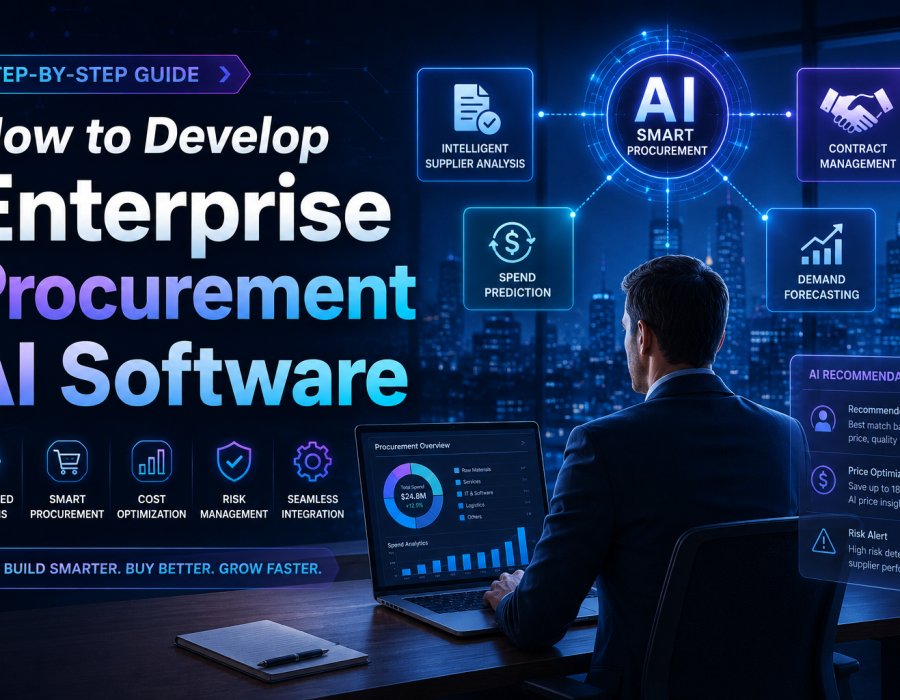
Think about procurement like the nervous system of an organization. Every supplier agreement, purchasing request, invoice, and sourcing decision sends signals throughout the business. Traditional procurement systems process transactions, but AI-powered procurement software interprets those signals and turns them into actionable intelligence.
Modern enterprises increasingly need systems capable of making faster decisions while reducing risk and controlling spending. AI procurement software provides that capability.
Step 1: Identify Procurement Challenges
Development should start with operational assessment.
Questions organizations should ask include:
- Which procurement processes are slow?
- Where do errors frequently occur?
- Which tasks consume excessive employee time?
- What supplier risks remain difficult to monitor?
Pain points reveal opportunities where AI can create measurable impact.
Step 2: Design Intelligent Workflows
Procurement AI should integrate naturally into business workflows.
Examples include automated invoice approvals, supplier recommendation engines, and smart contract review systems.
Workflow intelligence reduces repetitive work and allows procurement professionals to focus on strategic initiatives.
The objective is not replacing people. The objective is amplifying human capability.
Step 3: Build AI Models
Several AI models support procurement operations.
AI ModelProcurement UseClassification modelsSpend categorizationForecasting modelsDemand predictionNLP modelsContract extractionRecommendation enginesSupplier suggestionsRisk modelsVendor assessment
Training models requires historical procurement information and ongoing feedback.
Step 4: Integrate Enterprise Systems
Procurement rarely exists independently.
AI platforms should connect with:
- ERP systems
- Financial platforms
- CRM environments
- Supplier portals
- Inventory systems
APIs and middleware create smooth communication across systems.
Without integration, procurement AI becomes another isolated tool.
Step 5: Pilot and Improve
Many enterprises fail because they attempt organization-wide implementation immediately.
Pilot deployments reduce risk.
Teams can test one process such as invoice automation or supplier risk analysis before expanding capabilities.
Continuous monitoring improves prediction quality over time.
Conclusion
Developing enterprise procurement AI software combines technology with strategic business thinking. AI is changing procurement from a reactive administrative process into a proactive intelligence function. Enterprises that invest in scalable systems today build stronger operational foundations for tomorrow.
Comments