



Rainbow Mountain
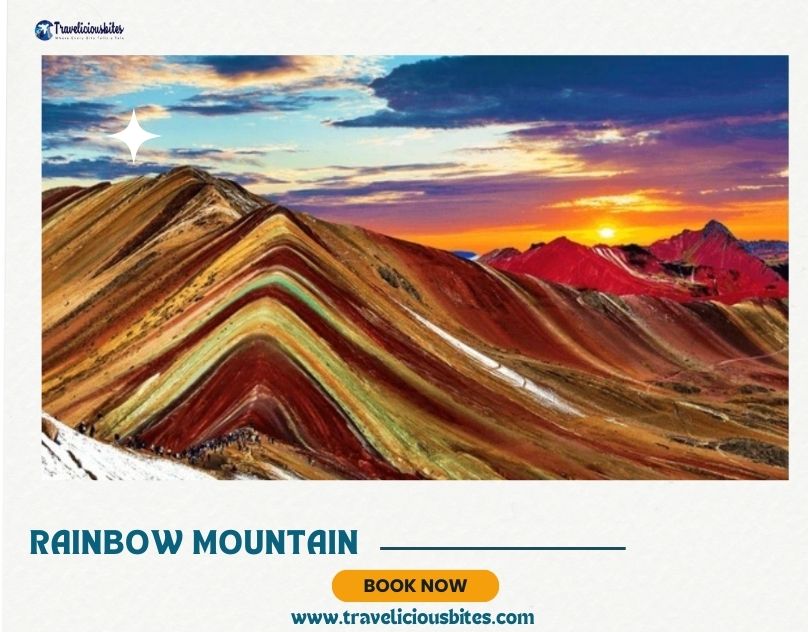
Rainbow Mountain is among the most spectacular nature sites on the globe. Surrounded by red, yellow, green, and purple layers spreading all over the terrain, this colorful place resembles a painting that came to life. Rainbow Mountain, or Vinicunca, as it is also known locally, or Montana de Siete Colores, has become one of the most photographed sites in South America in a very short period of time.
Rainbow Mountain is situated in the high Andes of Peru and is a marvel of the creativity of nature and a place where adventure lovers, hikers, and photography lovers cannot pass without visiting.
What is the location of Rainbow Mountain?
Rainbow Mountain is a mountain in southern Peru, approximately 100 kilometers (62 miles) northwest of Cusco, the former capital of the Inca Empire. It is one of the greatest tourist attractions in the world, and it is situated at an altitude of about 5,200 meters (17,060 feet) above sea level.
Due to its high altitude, one must prepare and take into consideration the conditions of the altitude in order to visit Rainbow Mountain.
What Makes Rainbow Mountain So Colored?
The colorfulness of Rainbow Mountain is the result of mineral deposits in the soil, which were created many millions of years ago. Color Breakdown
- Red: Iron oxide
- Yellow: Sulfur
- Green: Chlorite and copper minerals.
- White: Sandstone and quartz
- Purple: the mixture of manganese and iron.
These layers were also made up of minerals, and tectonic movements brought these layers up, and erosion is what made the stripes we have today; these stripes have very distinct colors.
Historical and Cultural Value.
Rainbow Mountain remained covered by the snow for centuries and only gained popularity during the period of 2015 when the melting glaciers revealed its bright colors. The region has been a sacred place to locals since the time of Ausangate, which is one of the most significant mountains in Andean spirituals.
To indigenous people, mountains are spirits that are alive and provide them with protection and direction.
Accessibility to Rainbow Mountain.
From Cusco
- Drive or take a tour bus to Cusipata or Pitumarca (34 hours).
- Go on a hiking tour with a duration of 4-6 kilometers.
- Get to the perspective following a difficult climb.
The majority of tourists prefer joining guided tours, which involve transportation, breakfast, and a guide.
The Hike to Rainbow Mountain
Difficulty Level
Difficult to strenuous because of:
- High altitude
- Steep terrain
- Thin air
Even well-worn-out hikers can be out of breath.
Hiking Time
1.5 to 3 hours uphill.
Horses
The local villagers have got the horse rentals available to people who require help in the climb.
Best Time to Visit for Rainbow Mountain
Dry season (May-September)—Ideal Season.
- Clear skies.
- Bright, visible colors.
- Cold mornings.
Wet Season (October to April)
- Fewer crowds.
- Rain and muddy trails.
- Colors can be less vivid.
Best months: The months of June, July, and August are the best months to take photographs and have good weather.
Packing Guide to Rainbow Mountain.
- Warm layered clothing
- Waterproof jacket
- Hiking boots
- Sunscreen and sunglasses
- Hat and gloves
- Water and snacks
- Cash (for horses or tips)
Conditions at the altitude vary rapidly; thus, preparation is necessary.
Health and Safety Tips
Altitude Sickness
Symptoms may include:
- Headache
- Nausea
- Dizziness
Tips to Reduce Risk
- 1-2 days acclimatization in Cusco.
- Drink coca tea
- Walk slowly and rest often
- Do not drink prior to the hike.
Weather Awareness
Weather can change suddenly. Never overlook predictions and neglect to follow instructions.
Photography Tips
- Go in the morning when there are fewer people.
- Use wide-angle lenses
- Add hikers or llamas to size.
- Do not be over-saturated in edits—natural colors are not dull.
Rainbow Mountain Red Valley.
Red Valley is a nearby, less crowded substitute for many tours with deep red scenery.
Why Visit Red Valley?
- Fewer tourists
- Unique scenery
- Great photo opportunities
The combination of the two makes the experience richer.
Environmental Responsibility
Tourism is associated with economic gains and threats to the environment.
How You Can Help
- Stay on marked trails
- Do not litter
- Respect local culture
- Do not touch or destroy rocks.
Sustainable tourism can be used to conserve Rainbow Mountain for the generations to come.
The case of Rainbow Mountain
Why Visit It?
✔ The most exceptional natural scenery in the world.
✔ Cultural and spiritual significance.
✔ Adventure and achievement experience.
✔ fantastic photographic sites.
✔ A once-in-a-lifetime destination.
Although it is physically tough, it is immensely satisfying to get to the top.
Final Thoughts
Rainbow Mountain is not just a colorful country hill; it is the forceful reminder of the art of nature and the geological history of the Earth. With a height of more than 5,000 meters and the colorful layers of minerals and Andean mountains being seen all over, the experience is unreal and memorable.
Having an adequate preparation and upholding the respect of the elevation and conscious traveling activities, Rainbow Mountain will be among the highlights of a Peru trip.
FAQs – Rainbow Mountain
1. Is Rainbow Mountain a safe place to visit?
Yes, it is safe for most of the travelers with proper acclimatization and guided tours.
2. How high is Rainbow Mountain?
About 5200 meters (17060 feet) above sea level.
3. Would I be required to be extremely fit in order to hike Rainbow Mountain?
You need to be quite fit, but horses can be hired.
4. Is Rainbow Mountain able to receive children or old people?
Yes, however, altitude can be problematic. The medical consultation is advised.
5. Does Rainbow Mountain operate all year round?
Yes, but weather conditions differ. The dry season is best.
6. How long does the hike take?
When the conditions are good and fast, this can take as little as 1.5-3 hrs uphill.
Comments