


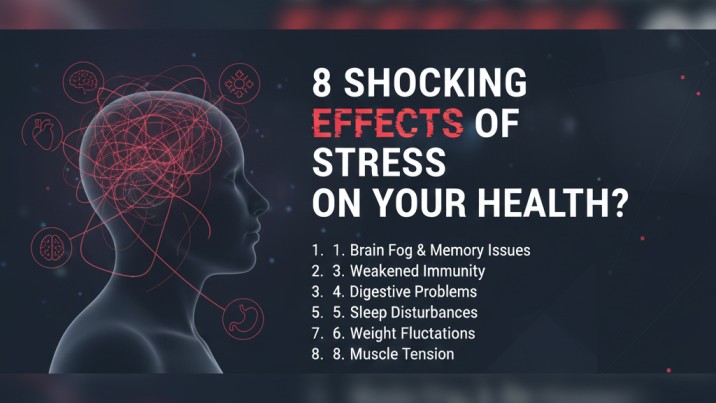
We all know stress feels awful in the moment—racing heart, tight shoulders, that knot in your stomach. But what’s scarier is what happens when stress sticks around for weeks, months, or even years. It stops being “just stress” and starts quietly rewiring and damaging your body in ways you might never connect back to those tense days at work or sleepless nights worrying.
Here are eight effects that science has proven—and they’re more serious than most of us realize.
1. Stress Literally Shrinks Your Brain
Chronic stress floods your system with cortisol. Over time, high cortisol levels can shrink the hippocampus—the part of your brain responsible for memory and learning. Studies on people with long-term stress (think caregivers or high-pressure jobs) show measurable reductions in brain volume. That foggy feeling? It might not just be tiredness.
2. It Ages You Faster Than Smoking or Sun Exposure
Telomeres are the protective caps at the ends of your DNA strands. Every time a cell divides, they get a little shorter—until eventually the cell can’t divide anymore and you age. Researchers at the University of California found that women with the highest stress levels had telomeres equivalent to someone ten years older.
3. Your Heart Takes the Biggest Hit
When you’re stressed, your body releases adrenaline and cortisol, which raise blood pressure and make your heart beat faster. Do that day after day and you dramatically increase the risk of hypertension, heart attacks, and stroke. In fact, people with high stress jobs have a 40–50% higher chance of heart disease—even if they exercise and eat well.
4. Stress Destroys Your Gut (and Your Mood)
You’ve probably heard of the gut-brain axis. Up to 90% of your serotonin—the “happy chemical”—is made in your digestive tract. Chronic stress disrupts the balance of good and bad bacteria, leading to leaky gut, bloating, IBS, and even depression and anxiety that seem to come out of nowhere.
5. It Makes You Gain Weight—Especially Belly Fat
Cortisol tells your body to store fat, and it has a favorite storage spot: right around your midsection. This “visceral fat” wraps around your organs and pumps out inflammatory chemicals, setting the stage for diabetes and heart disease. That’s why two people can eat the same diet and the stressed one gains weight around the middle.
6. Your Immune System Basically Goes on Vacation
Short bursts of stress can temporarily boost immunity (that’s the fight-or-flight advantage). But long-term stress suppresses immune cells. Result? You catch every cold that goes around, wounds heal slower, and even vaccines work less effectively. One famous study showed stressed medical students had weaker immune responses during exam season.
7. It Shows Up on Your Skin—Big Time
Acne flare-ups before a big presentation? Early wrinkles? Thinning hair? Stress is often the hidden trigger. It increases oil production, breaks down collagen, and can worsen conditions like eczema, psoriasis, and rosacea. Dermatologists say stress is one of the top three aggravators they see in clinic—right after diet and hormones.
8. It Can Quietly Push You Toward Diabetes
Constant cortisol raises blood sugar levels so you have quick energy to “escape the tiger.” When there’s no tiger and this happens daily, your cells eventually become resistant to insulin. That’s the exact path to prediabetes and type 2 diabetes—even if you’re not overweight.
The Good News: You Can Catch It Early
The scariest part about these eight effects? Most of them are silent until the damage is advanced. You don’t feel your hippocampus shrinking or your telomeres shortening. But modern medicine has a simple way to peek under the hood: blood tests.
A basic panel can check:
- Cortisol levels (morning and evening)
- Fasting glucose and HbA1c (early diabetes markers)
- Lipid profile (heart disease risk)
- Inflammatory markers like hs-CRP
- Thyroid function (stress loves to mess with thyroid)
- Vitamin D and B12 (commonly depleted by stress)
Many people now book a blood test online or opt for blood test at home services—no traffic, no waiting rooms, results in 24–48 hours. In cities like Jaipur, finding the best lab in Jaipur with accurate reporting and reasonable blood test price has become easier than ever. Some labs even offer comprehensive health package online that bundle stress-related tests at a discount.
Small Steps That Make a Big Difference
While waiting for your results, you can start lowering the load today:
- 10-minute daily meditation (proven to lower cortisol)
- 7–9 hours of sleep (non-negotiable for brain repair)
- 30-minute walks (burns off stress hormones)
- Saying “no” more often (protects your schedule and sanity)
Stress might be part of modern life, but letting it run unchecked is optional. Your body is remarkably good at healing itself once the pressure comes off—and sometimes all it takes is seeing the numbers on a lab report to finally take it seriously.
If it’s been a rough year (or three), consider treating yourself to a quick check-up. Search “blood test near me” or browse a health package online. The peace of mind—and the chance to reverse some of this damage—is worth far more than the blood test price.
Comments